
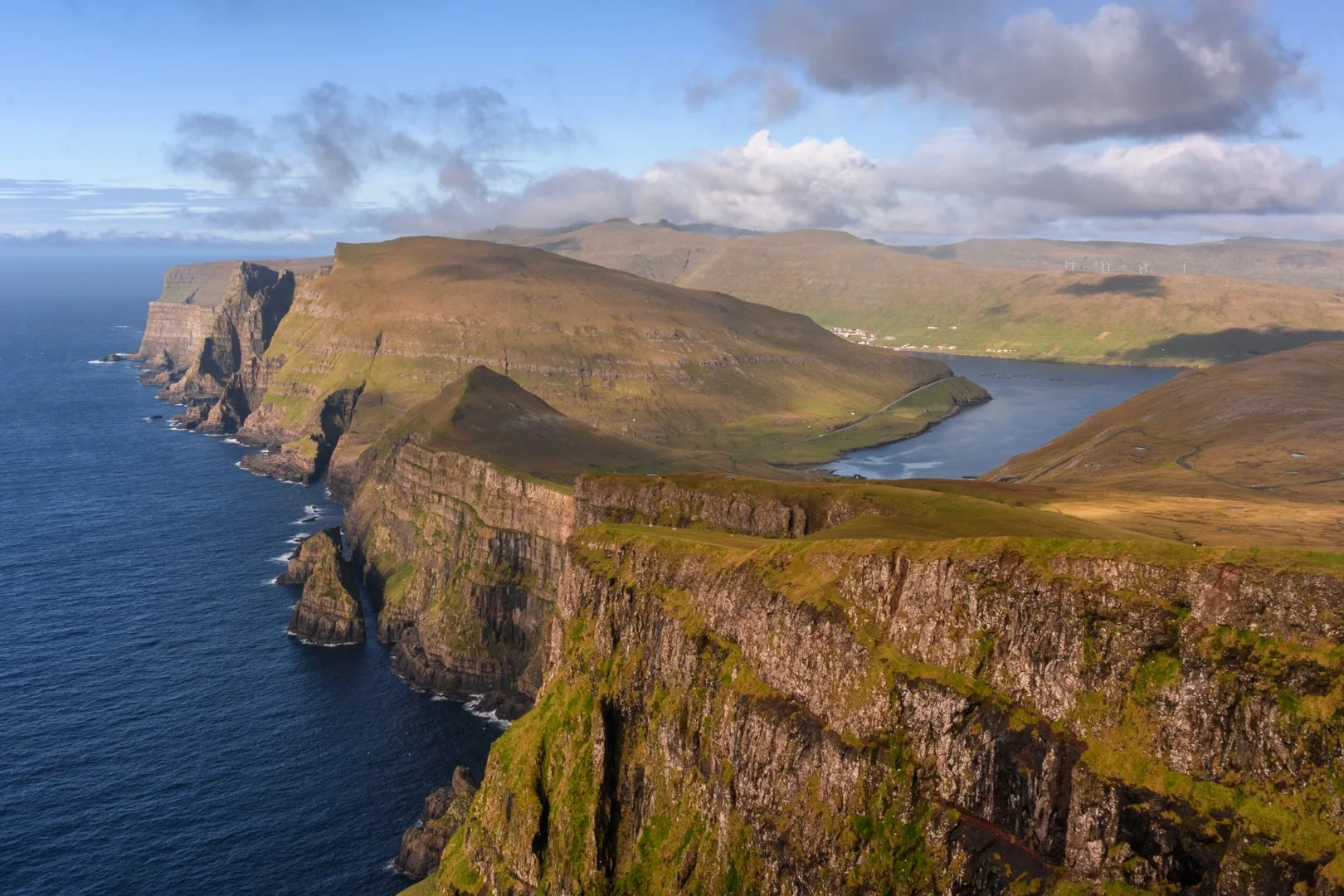
FAROE ISLANDS LANDSCAPE PHOTOGRAPHY WORKSHOP
20–27 April 2027
Spring light, longer days and wonderfully unpredictable weather
8 Days / 7 Nights · Maximum 4 Photographers · Private Bedroom · Breakfast & Evening Meals Included
Approximately £2,995 / $4,050 / €3,485 / 26,050 DKK per person
£500 equivalent deposit secures your place
APRIL IN THE FAROE ISLANDS
April is when the Faroe Islands really begin to wake up after winter.
The days are considerably longer, the landscape is turning beautifully green and waterfalls continue to spill down the mountains after the wetter winter months.
But this is still the North Atlantic.
Spring sunshine can disappear behind cloud. Mist can wrap itself around a mountain. Rain can move through a valley and, occasionally, winter can remind us that it hasn't gone completely.
For landscape photography, that's exactly what makes April interesting.
We have more daylight to explore, but we still have the changing weather, atmosphere and dramatic conditions that make photographing the Faroes so addictive.
Spring may have arrived, but the islands haven't suddenly become predictable.
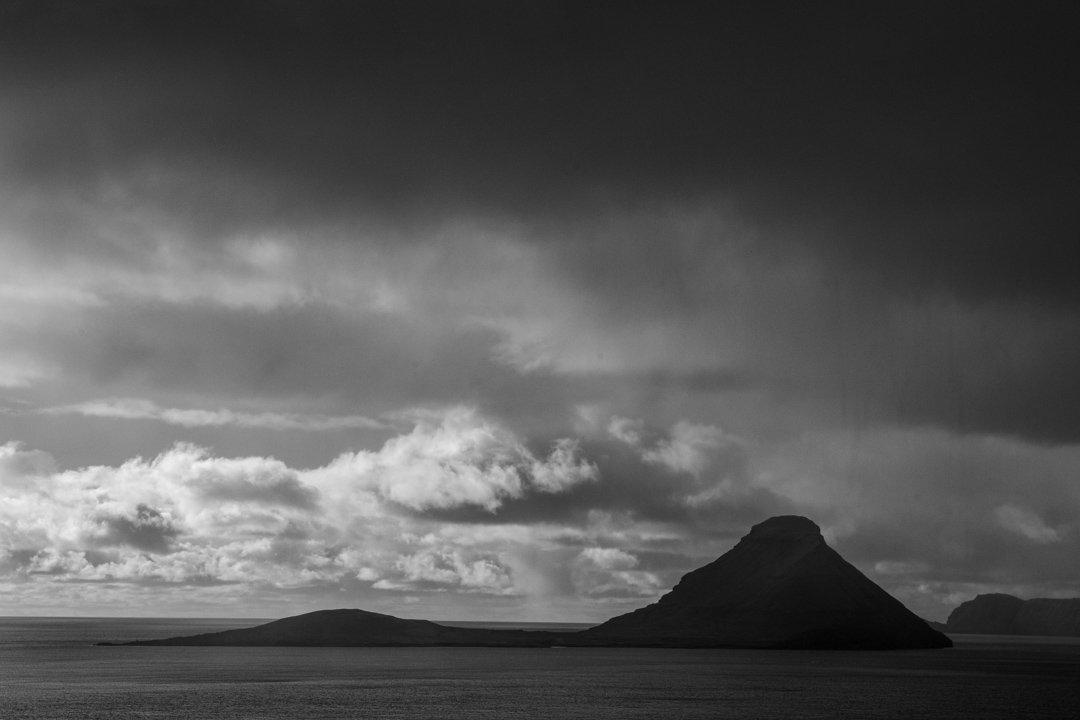
WHY PHOTOGRAPH THE FAROE ISLANDS IN APRIL?
The landscape is coming back to life
By late April, the islands are becoming wonderfully green again.
The contrast between fresh grass, dark cliffs, waterfalls and the Atlantic gives the landscape a very different character from the winter months.
It's also lambing season, with newborn lambs appearing across the islands.
We'll obviously give animals and nesting wildlife plenty of space, but it's another small sign that spring has properly arrived.
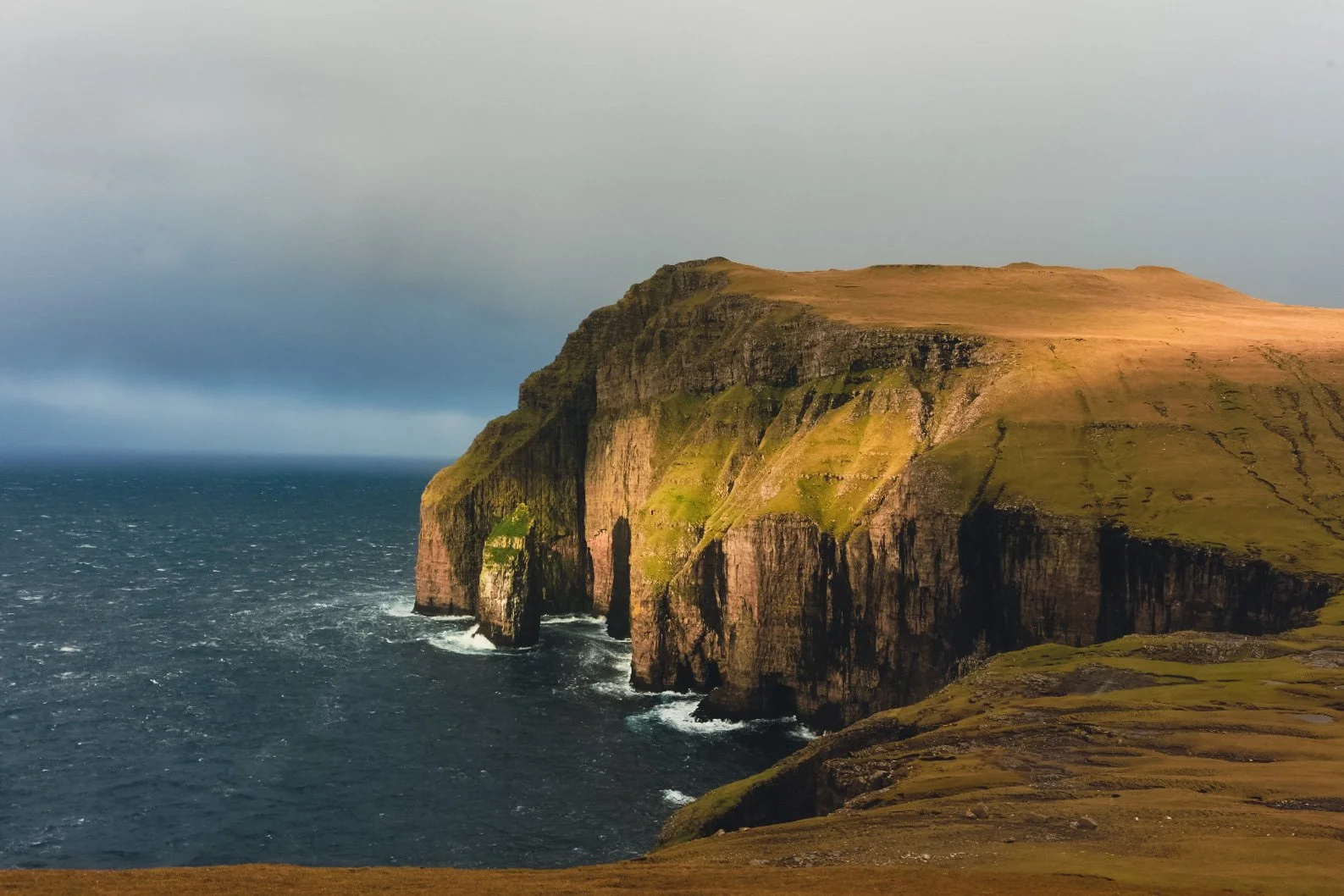
Longer days mean more opportunity
One of the biggest differences between March and April is daylight.
By late April we have much longer days, giving us more freedom to explore different parts of the islands without feeling that we're racing against an early sunset.
That doesn't mean photographing constantly from dawn until dusk.
Far from it.
It simply gives us more flexibility to travel, scout locations, wait for conditions and make decisions based on what the weather is actually doing.
Spring light and changing weather
April can produce some wonderful combinations of light and weather.
Bright spring sunshine.
Dark Atlantic clouds.
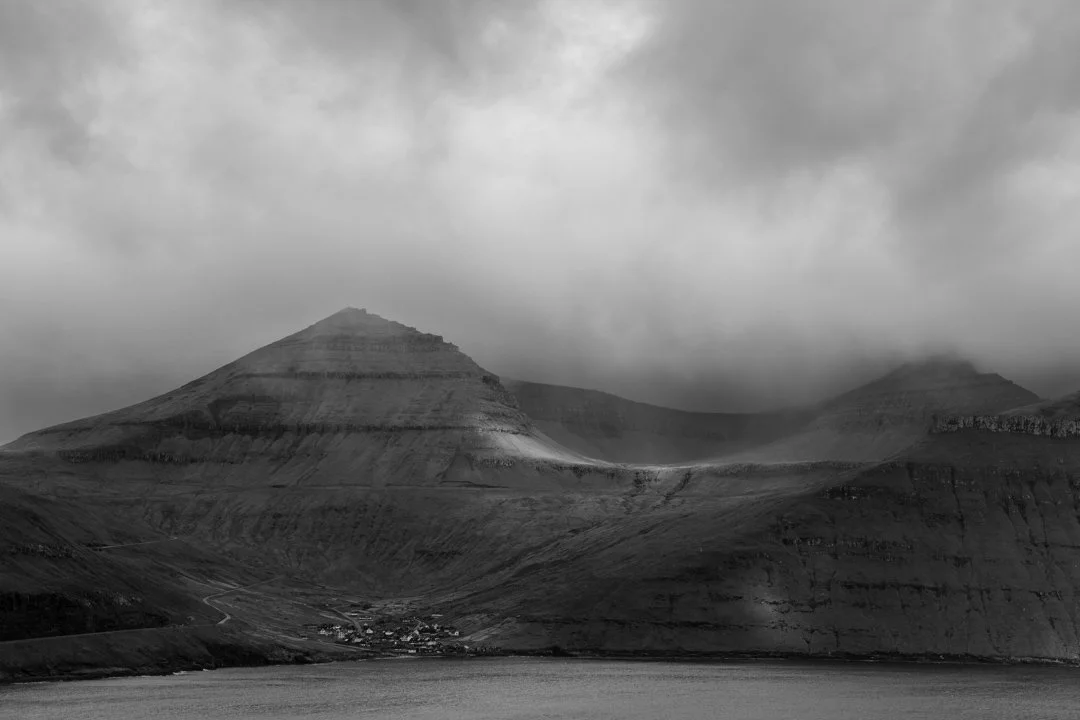
Mist rolling over mountain ridges.
Rain showers moving through valleys.
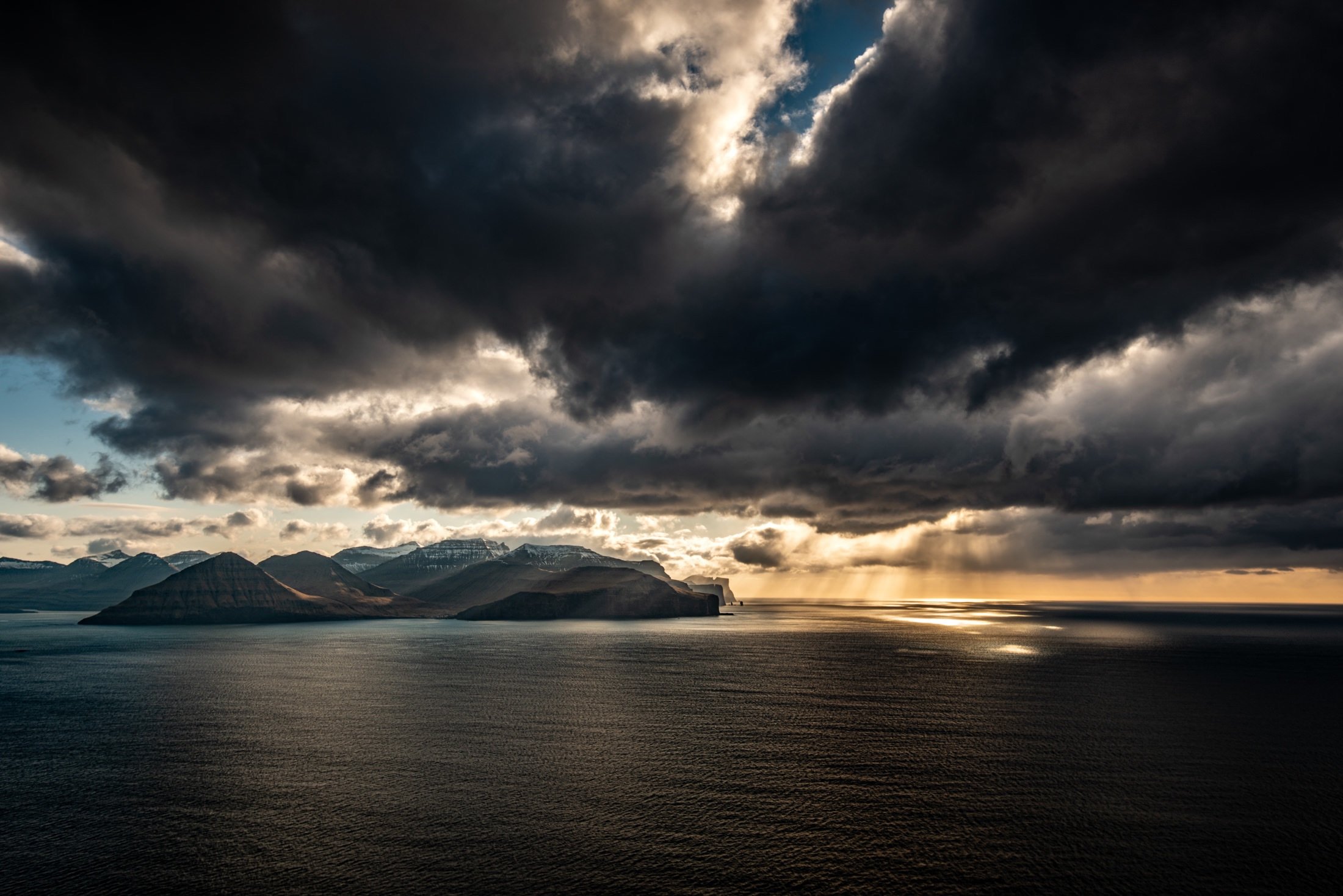
And those brief moments when light breaks underneath the cloud and transforms an otherwise grey landscape.
These are often the conditions I enjoy photographing most.
If the weather looks dramatic rather than perfect, that's usually when things start getting interesting.
Waterfalls everywhere
Water is a huge part of photographing the Faroe Islands.
In spring, waterfalls spill down mountainsides throughout the islands, giving us countless opportunities to work with movement, foregrounds and slower shutter speeds.
We'll photograph the famous waterfalls when conditions are right, but I'm equally interested in the hundreds of smaller falls that appear across the landscape after rain.
Sometimes the waterfall nobody has a name for makes the better photograph.
Quieter than summer
April remains outside the main summer tourist season.
That means many locations still feel wonderfully peaceful, allowing us more room to photograph without the crowds that can appear later in the year.
For a small group of just four photographers, that's a lovely combination:
more daylight, spring landscapes and fewer visitors.
A little Faroese culture too
Our workshop dates include 25 April — Flag Day in the Faroe Islands.
You'll see the Faroese flag, Merkið, flying throughout the islands and there may be local events taking place during the day.
Photography will remain the focus of the workshop, but moments like this are part of experiencing the islands rather than simply travelling between viewpoints.
WHAT COULD WE PHOTOGRAPH?
I don't operate with a fixed list of locations that we have to tick off.
Instead, I'll watch the weather, wind, cloud, tides and road conditions and decide where I believe we'll have the strongest photographic opportunities.
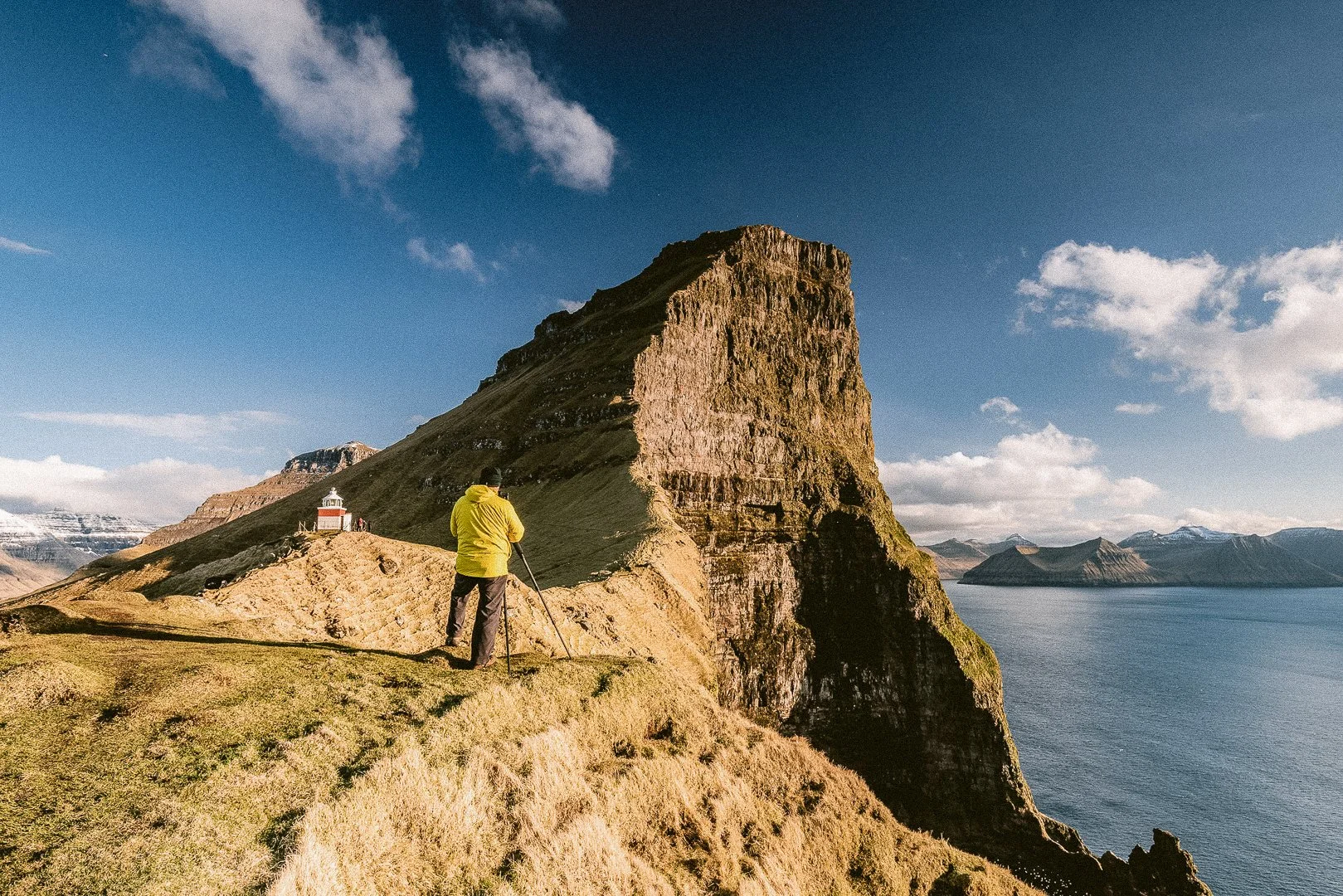
During the week we may photograph dramatic sea cliffs, waterfalls, green mountains, black beaches, traditional villages, fjords and some of the famous landscapes that first made many of us want to visit the Faroe Islands.
Places such as Gásadalur, Saksun, Tjørnuvík, Gjógv, Funningur, Norðradalur, Bøur and Vágar may all feature.
But I also want to take you beyond the obvious viewpoints.
I've been photographing the Faroe Islands since 2012 and now live here year-round. Some of the locations I enjoy most aren't necessarily the places you'll find at the top of every Faroe Islands photography guide.
And sometimes the best location is simply the one where the weather is doing something extraordinary that day.
PHOTOGRAPHY IN APRIL
This workshop is particularly well suited to photographers interested in:
Dramatic landscape photography
Spring landscapes and fresh greens
Waterfalls and moving water
Long-exposure seascapes
Working creatively with rain, mist and cloud
Telephoto landscape photography
Changing directional light
Mountain and coastal compositions
Using filters effectively
Sunrise, sunset and blue-hour photography
Throughout the week I'll be there whenever you want another pair of eyes — whether that's discussing a composition, working with difficult light, photographing in rain and mist or deciding how best to approach the conditions in front of us.
WE FOLLOW THE CONDITIONS
You won't receive an itinerary that says:
Tuesday, 10:00 — photograph this waterfall.
The Faroese weather would find that hilarious.
Instead, I'll make decisions based on the conditions we're actually experiencing.
Sometimes we'll decide our plan the night before.
Sometimes we'll change it over breakfast.
And sometimes I'll be driving towards one location, look across towards another island and completely change our plans.
That's part of photographing the Faroes properly.
We're not here to tick locations off a list.
We're here to find the best photographs we can make during those eight days.
A SMALL GROUP OF JUST FOUR PHOTOGRAPHERS
I've limited this workshop to a maximum of four photographers.
That gives me time to work individually with everyone when they want advice, while still giving experienced photographers plenty of freedom to work independently.
It also gives us something equally important in the Faroe Islands:
Flexibility.
Four photographers can move quickly.
We can change plans, react to the weather and give everyone room to find their own compositions rather than creating a small forest of tripods at every viewpoint.
A WEEK IN THE FAROE ISLANDS
This isn't simply about collecting photographs.
We'll spend eight days exploring a small group of islands in the middle of the North Atlantic, living together in our workshop house, eating together, talking photography and heading out whenever the weather gives us an opportunity.
April gives us plenty of daylight, which means we can explore further without feeling that every day has to become a race against darkness.
Some days will still be long.
Some will certainly be wet.
And I'm reasonably confident the waterproof trousers will earn their place in your suitcase.
But there will also be those moments when the rain passes, the cloud begins to break and spring light suddenly hits the landscape.
Those are the moments we're looking for.
APRIL WORKSHOP FAQs
-
No.
My workshops are suitable for photographers with different levels of experience.
You might still be getting comfortable with manual exposure and filters, or you may have been photographing landscapes for years.
With a maximum of only four photographers, I can offer as much or as little photography guidance as each person wants.
-
Anything from beautiful spring sunshine to rain, mist, strong wind and occasionally wintry conditions.
April is spring in the Faroe Islands, but the North Atlantic still likes to remind us who's in charge.
Good waterproof clothing, proper walking boots and several warm layers are essential.
I'll send you a detailed equipment and clothing guide before the workshop.
-
Yes, although it isn't something I would ever promise.
Snow can still fall on the islands during spring, particularly on higher ground.
If it happens during our workshop, we'll make the most of it photographically.
-
Yes.
By late April we have considerably more daylight, giving us much more flexibility for exploring different islands, travelling between locations and waiting for conditions to develop.
Longer days don't mean we'll photograph non-stop.
They simply give us more options.
-
Bad weather doesn’t necessarily mean bad photography.
Cloud, wind, rain, mist and dramatic skies can produce some of the most interesting conditions we photograph.
I’ll continually assess the weather and move us around the islands accordingly.
If I consider a location unsafe because of wind, snow, road conditions or another factor, we’ll simply change the plan.
Safety always comes first.
-
No.
The Faroese weather changes too quickly for a rigid itinerary to make sense.
I’ll continually monitor the forecast, wind, light, tides and road conditions and choose our locations accordingly.
That flexibility is one of the biggest advantages of keeping the group small.
COME AND PHOTOGRAPH SPRING IN THE FAROE ISLANDS WITH ME
20–27 April 2027
8 Days / 7 Nights
Maximum 4 Photographers
Private Bedroom
Breakfast & Evening Meals Included
Approximately £2,995 / $4,050 / €3,485 / 26,050 DKK per person
£500 equivalent deposit secures your place
Eight days exploring the Faroe Islands as the landscape moves properly into spring.
Longer days, fresh green landscapes, waterfalls and whatever weather the North Atlantic decides to send our way.