
FAROE ISLANDS LANDSCAPE PHOTOGRAPHY WORKSHOP
9–16 March 2027
Winter light, wild weather and the first signs of spring
8 Days / 7 Nights · Maximum 4 Photographers · Private Bedroom · Breakfast & Evening Meals Included
Approximately £2,995 / $4,050 / €3,485 / 26,050 DKK per person
£500 equivalent deposit secures your place

MARCH IN THE FAROE ISLANDS
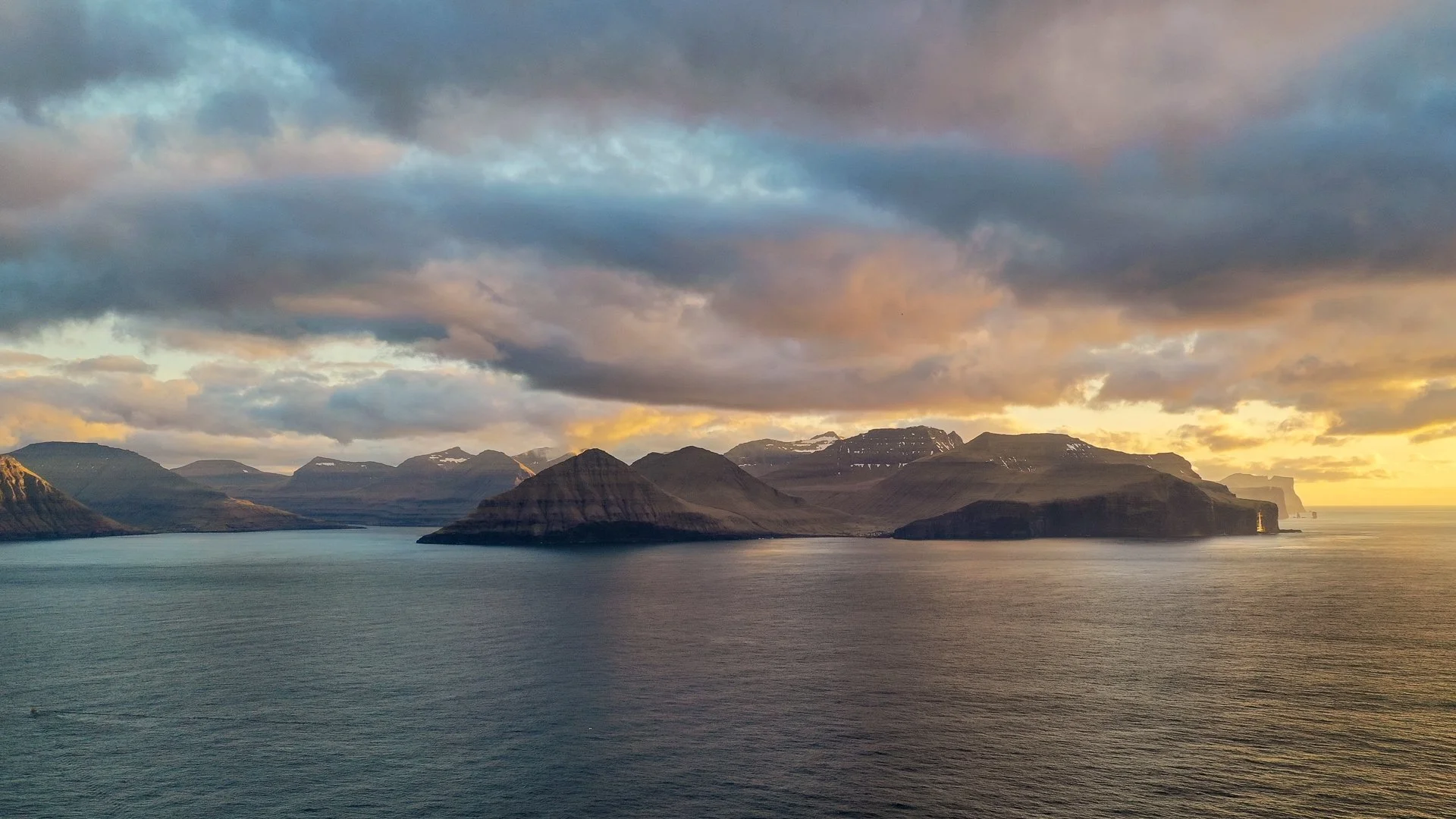
March is one of my favourite times of year to photograph the Faroe Islands.
Winter hasn't quite finished with us yet, but spring is beginning to appear.
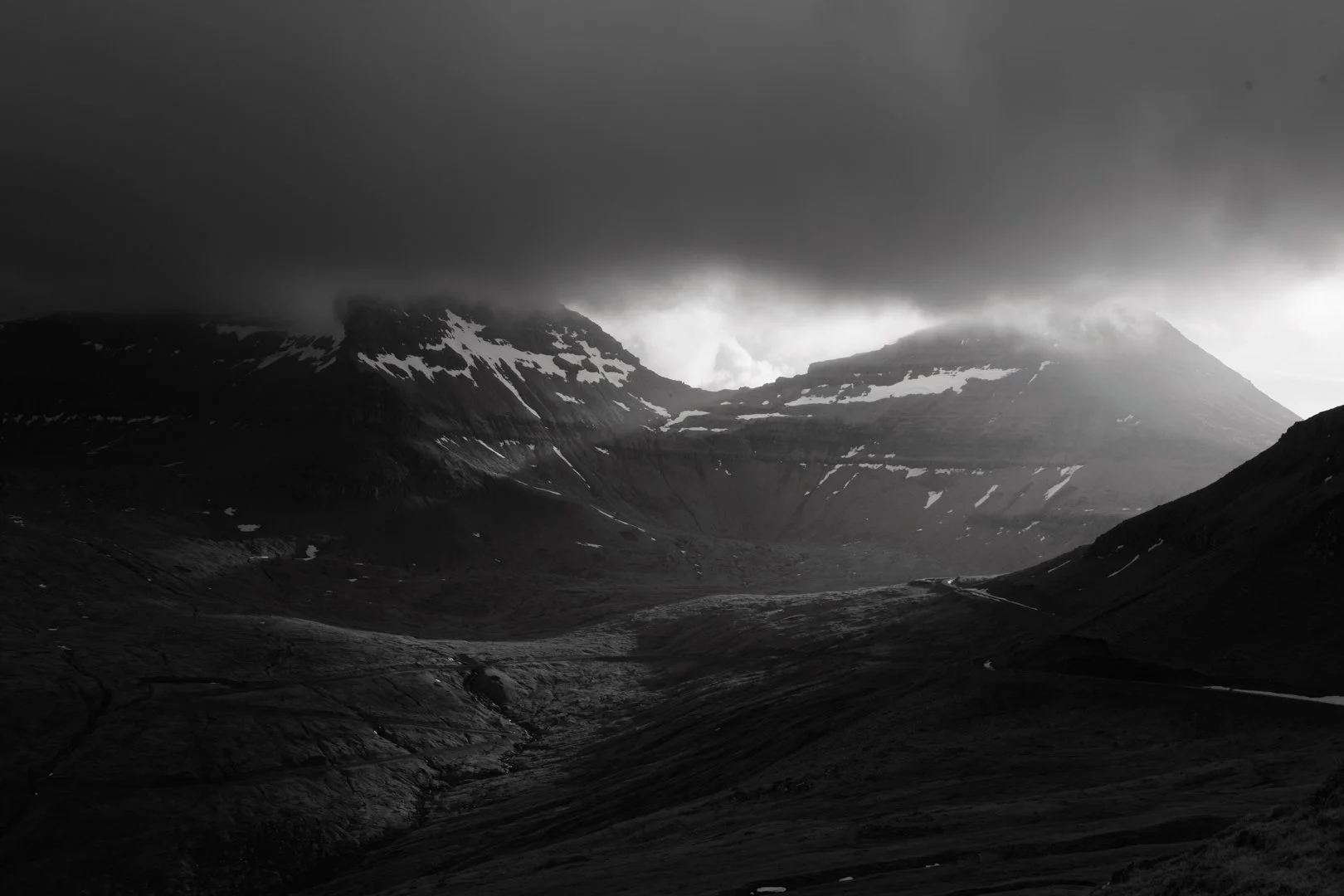
The mountains can still be covered in snow. Waterfalls tumble down dark cliffs. The Atlantic can be wonderfully wild, and the lower sun can create beautiful directional light across the landscape.
Then, sometimes within a matter of hours, everything changes.
Snow becomes rain. Cloud lifts from a mountain. A dark valley suddenly catches a shaft of light. One island can be sitting beneath heavy weather while somewhere else the landscape is glowing.
For a landscape photographer, that unpredictability is exactly what makes March so exciting.
This isn't a workshop built around perfect blue skies.
It's about light, atmosphere, weather and reacting to whatever the Faroe Islands give us.
WHY PHOTOGRAPH THE FAROE ISLANDS IN MARCH?
Winter is still within reach
March sits right on the boundary between winter and spring.
Snow is never guaranteed in the Faroe Islands, particularly at sea level, but wintry conditions are still very possible.
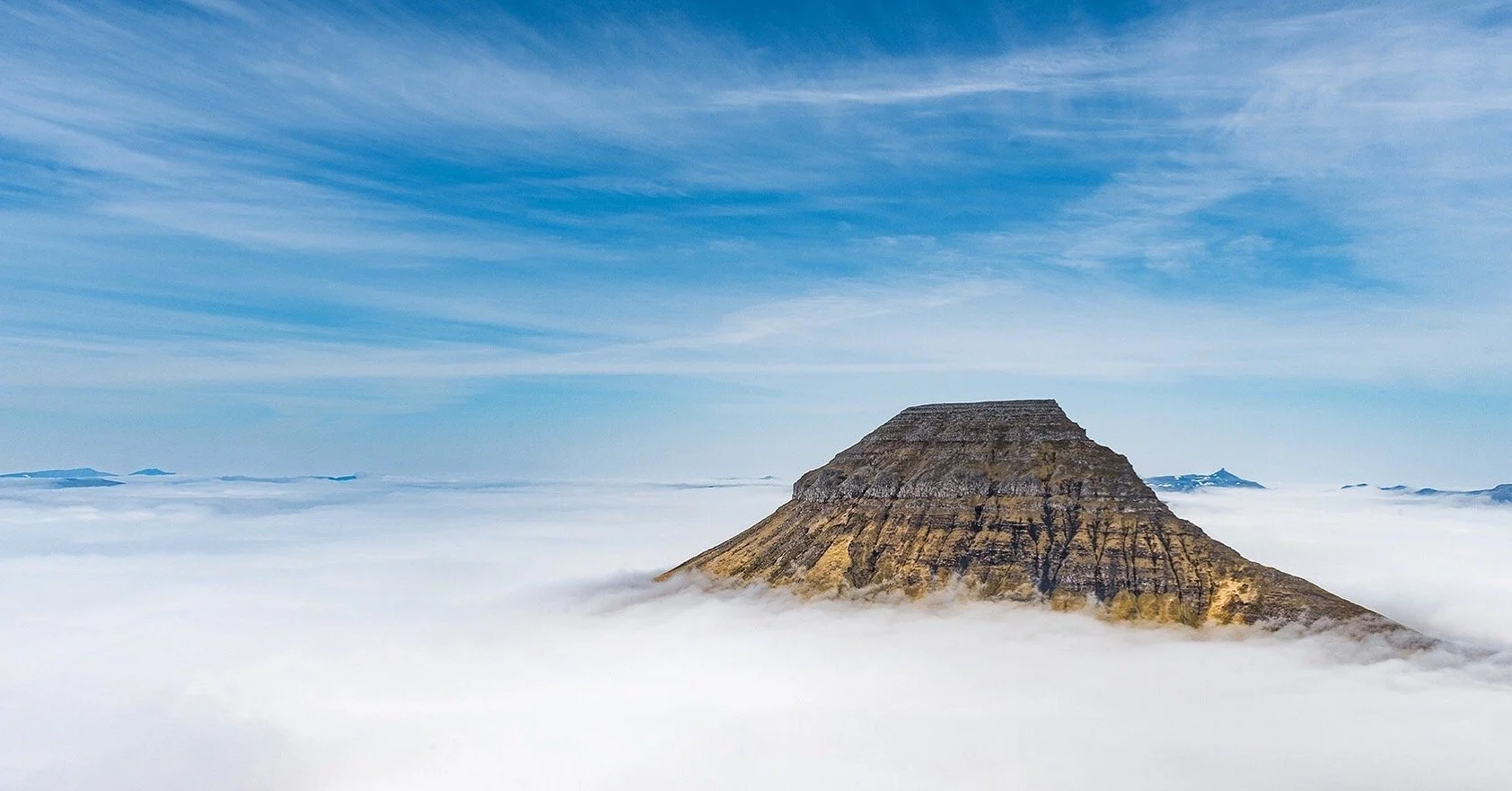
When snow does arrive, it completely changes the landscape. It picks out layers in the mountains, simplifies foregrounds and creates wonderful contrast against the dark cliffs and Atlantic Ocean.
We might wake to green mountains one morning and find them white the next.
That's the Faroes.
Beautiful low-angle light
One of the reasons I love photographing here outside the summer months is the quality of the light.
Rather than having the sun high overhead for much of the day, March gives us a lower sun and longer shadows, bringing more shape, texture and depth into the landscape.
It also means we're not restricted to a tiny sunrise or sunset window.
When the weather cooperates, photographic opportunities can develop throughout the day.
And when they do, we'll be ready for them.
Waterfalls, weather and moving water
March is particularly well suited to the kind of photography I love.
Water cascading down mountainsides.
Cloud wrapping around peaks.
Atlantic swells breaking against cliffs.
Rain moving through valleys.
Light appearing beneath a storm.
These are the conditions where slower shutter speeds, filters and careful composition can completely transform a scene.
If you want advice, I'll be there to help you make the most of those conditions rather than simply waiting for the rain to stop.
Because if we waited for Faroese rain to stop every time, we'd spend an alarming amount of the workshop drinking coffee.
Fewer visitors
March sits well outside the busiest summer season.
That gives the islands a very different feeling.
Villages are quieter, popular viewpoints are less crowded and there are fewer people competing for the same compositions.
For me, that suits the Faroe Islands perfectly.
These landscapes feel at their best when they feel wild.
And perhaps… the Northern Lights
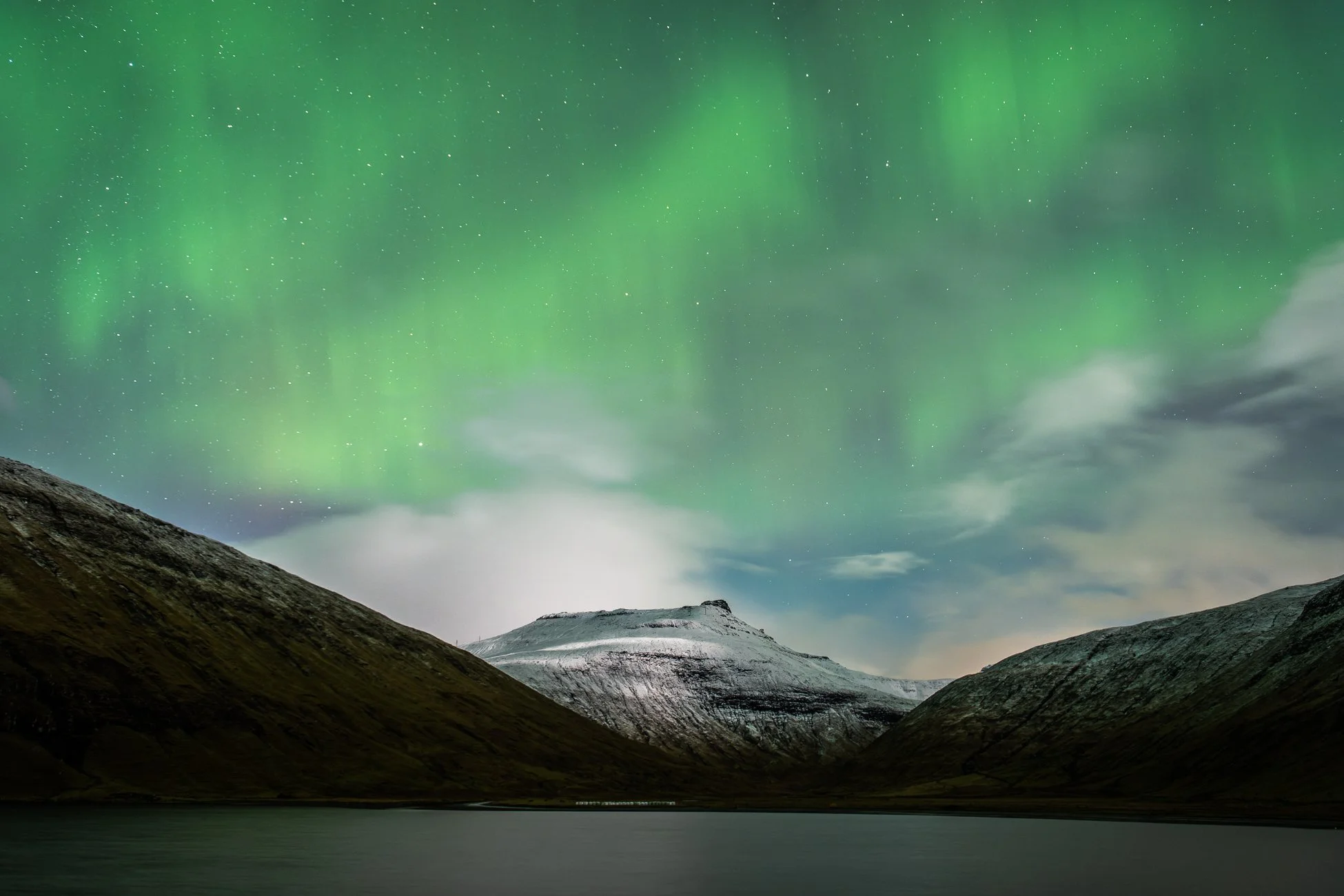
March still gives us dark nights, so if solar activity and clear skies happen to line up, there is a possibility of seeing and photographing the Northern Lights.
There are absolutely no guarantees, and I don't sell this as a Northern Lights workshop.
But if the opportunity appears while we're together, I'll be watching the forecast.
And we'll go.
WHAT COULD WE PHOTOGRAPH?
I don't operate with a fixed list of locations that we have to tick off.
Instead, I'll watch the weather, wind, cloud, tides and road conditions and decide where I believe we'll have the strongest photographic opportunities.
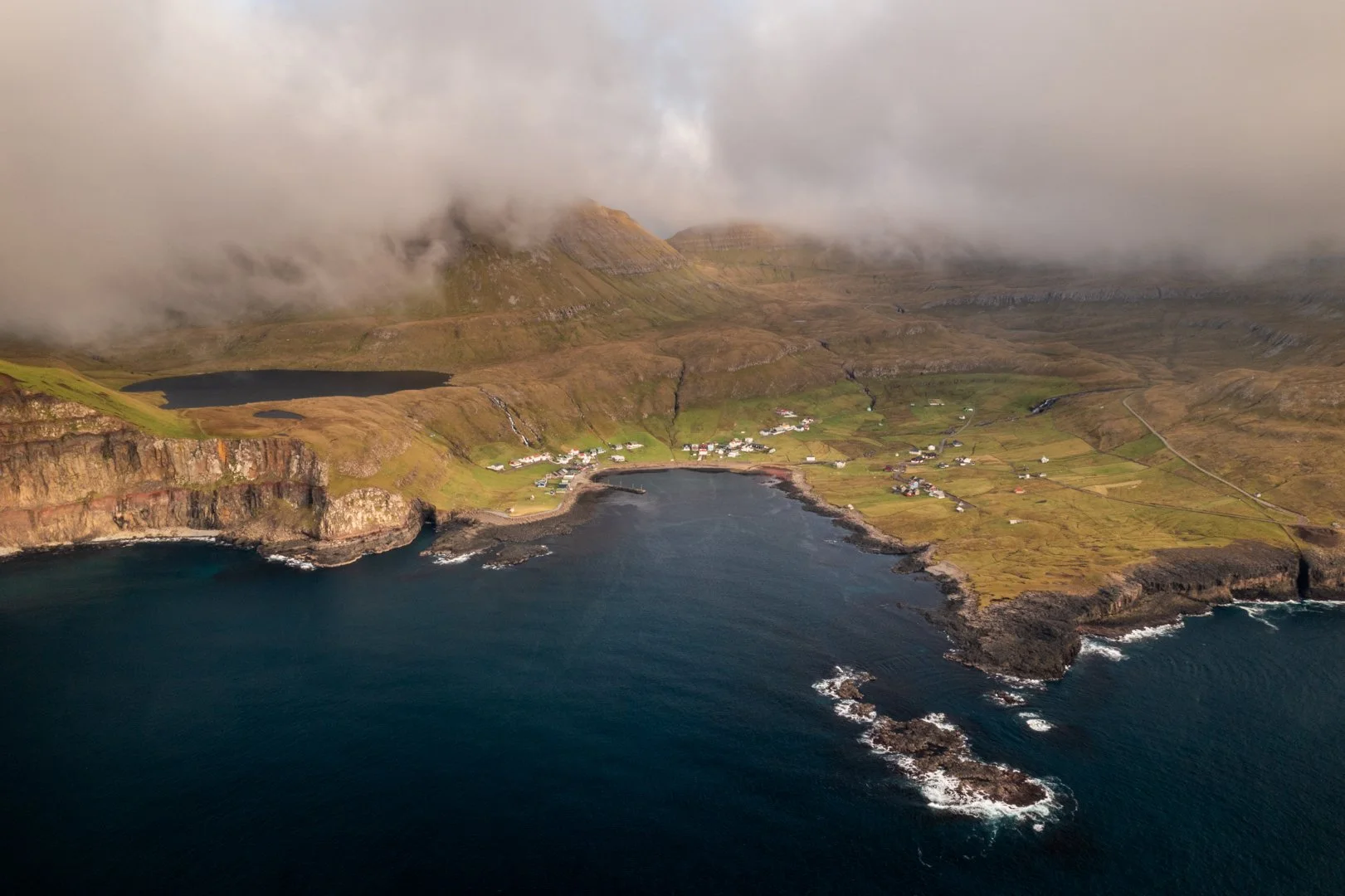
During the week we may photograph dramatic sea cliffs, waterfalls, mountains, black beaches, traditional villages, fjords and some of the famous landscapes that first made many of us want to visit the Faroe Islands.
Places such as Gásadalur, Saksun, Tjørnuvík, Gjógv, Funningur, Norðradalur, Bøur and Vágar may all feature.
But I also want to take you beyond the obvious viewpoints.
I've been photographing the Faroe Islands since 2012 and now live here year-round. Some of the locations I enjoy most aren't necessarily the places you'll find at the top of every Faroe Islands photography guide.
And sometimes the best location is simply the one where the weather is doing something extraordinary that day.
PHOTOGRAPHY IN MARCH
This workshop is particularly well suited to photographers interested in:
Dramatic landscape photography
Long-exposure seascapes
Waterfalls and moving water
Working creatively with cloud and weather
Telephoto landscape photography
Low directional light
Finding compositions in complicated mountain landscapes
Working with filters
Sunrise, sunset and blue-hour photography
Winter and snow photography when conditions allow
And, if we're fortunate with conditions, Northern Lights photography.
Throughout the week I'll be there whenever you want another pair of eyes — whether that's discussing a composition, working with difficult light, photographing in rain and mist or deciding how best to approach the conditions in front of us.
If you've found a composition and want to work independently, I'll give you the space to do exactly that.
WE FOLLOW THE CONDITIONS
You won't receive an itinerary that says:
Tuesday, 10:00 — photograph this waterfall.
The Faroese weather would find that hilarious.
Instead, I'll make decisions based on the conditions we're actually experiencing.
Sometimes we'll decide our plan the night before.
Sometimes we'll change it over breakfast.
And sometimes I'll be driving towards one location, look across towards another island and completely change our plans.
That's part of photographing the Faroes properly.
We're not here to tick locations off a list.
We're here to find the best photographs we can make during those eight days.
A SMALL GROUP OF JUST FOUR PHOTOGRAPHERS
I've limited this workshop to a maximum of four photographers.
That gives me time to work individually with everyone when they want advice, while still giving experienced photographers plenty of freedom to work independently.
It also gives us something equally important in the Faroe Islands:
Flexibility.
Four photographers can move quickly.
We can change plans, react to the weather and give everyone room to find their own compositions rather than creating a small forest of tripods at every viewpoint.
A WEEK IN THE FAROE ISLANDS
This isn't simply about collecting photographs.
We'll spend eight days exploring a small group of islands in the middle of the North Atlantic, living together in our workshop house, eating together, talking photography and heading out whenever the weather gives us an opportunity.
Some days will be long.
Some will be wet.
At some point I'm reasonably confident somebody will question why they own so many expensive pieces of waterproof clothing.
But there will also be those moments when the cloud opens, light hits a mountain and suddenly everyone goes very quiet.
Those are the moments I keep coming back for.
YOUR HOME FOR THE WEEK
You'll have your own private bedroom in our shared workshop accommodation.
Bathrooms, kitchen, dining and living areas are shared with the rest of the group.
Breakfast is provided each morning, and most evening meals will be prepared at the house.
For me, staying together is part of the workshop experience.
After a day outside, we can come back, get warm, back up photographs, talk about what we've photographed and look at the weather for the following day.
It gives the week a much more relaxed and personal feel than everyone disappearing into separate hotel rooms each evening.
WHAT'S INCLUDED?
Your March workshop includes:
8 days / 7 nights
7 nights accommodation with your own private bedroom
Breakfast each morning
Evening meals at our accommodation
Collection from Vágar Airport on arrival day
Drop-off at Vágar Airport on departure day
All workshop transport
Photography guidance and support throughout the week whenever you want it
Image review and post-processing guidance when time and conditions allow
Ferries and road tunnels used during the workshop
Location and land-access fees included in the workshop itinerary
What's not included
Flights to and from the Faroe Islands.
Lunches, snacks and drinks.
Meals eaten at restaurants or cafés.
Alcohol.
Accommodation outside the workshop dates.
Personal expenses.
Travel, medical and photography-equipment insurance.
[VIEW FULL WORKSHOP DETAILS]
HOW FIT DO I NEED TO BE?
Some of the best landscapes in the Faroe Islands require walking over uneven, wet and sometimes steep ground.
Most photographic locations involve relatively manageable walks, but some potential locations may involve hikes of approximately 4–8 km, depending on the weather and the itinerary we choose.
You should therefore be comfortable:
Walking while carrying your photography equipment.
Walking over uneven and occasionally pathless terrain.
Using wet or slippery paths.
Spending extended periods outdoors in changeable weather.
Good waterproof walking boots are essential, and I strongly recommend walking poles.
I will always consider the group when choosing locations and won't push anybody into conditions that I consider unsafe.
If you're unsure about your fitness or have any mobility concerns, please contact me before booking.
I'd much rather have a conversation beforehand and make sure the workshop is suitable for you.
MARCH WORKSHOP FAQs
-
No.
My workshops are suitable for photographers with different levels of experience.
You might still be getting comfortable with manual exposure and filters, or you may have been photographing landscapes for years.
With a maximum of only four photographers, I can offer as much or as little photography guidance as each person wants.
-
Not likely.
Snow is possible in March, particularly on higher ground, but it can never be guaranteed.
That's part of what makes this time of year so interesting. March sits between winter and spring, and conditions can change dramatically over the course of the week.
Whatever the islands give us, we'll work with it.
-
Possibly.
March still gives us dark nights, so there is a chance of seeing the Northern Lights if solar activity, cloud and weather conditions all cooperate.
This isn't sold as a dedicated Northern Lights workshop, so aurora can never be promised.
But if the opportunity appears, I'll certainly be watching the forecast.
-
Pretty much everything.
March in the Faroe Islands can bring sunshine, rain, strong wind, sleet and snow — sometimes several of those in the same day.
Good waterproof clothing, proper walking boots and warm layers are essential.
I'll send you a detailed equipment and clothing guide before the workshop.
-
Bad weather doesn't necessarily mean bad photography.
Cloud, wind, rain, mist and dramatic skies can produce some of the most interesting conditions we photograph.
I'll continually assess the weather and move us around the islands accordingly.
If I consider a location unsafe because of wind, snow, road conditions or another factor, we'll simply change the plan.
Safety always comes first.
-
No.
The Faroese weather changes too quickly for a rigid itinerary to make sense.
I'll continually monitor the forecast, wind, light, tides and road conditions and choose our locations accordingly.
That flexibility is one of the biggest advantages of keeping the group small.
COME AND PHOTOGRAPH MARCH IN THE FAROE ISLANDS WITH ME
9–16 March 2027
8 Days / 7 Nights
Maximum 4 Photographers
Private Bedroom
Breakfast & Evening Meals Included
Approximately £2,995 / $4,050 / €3,485 / 26,050 DKK per person
£500 equivalent deposit secures your place
Eight days chasing light, weather and photographs in the place I now call home.
If dramatic landscapes, changing conditions and the possibility of a little Faroese winter chaos sound like your kind of photography trip, I'd love to have you along.