
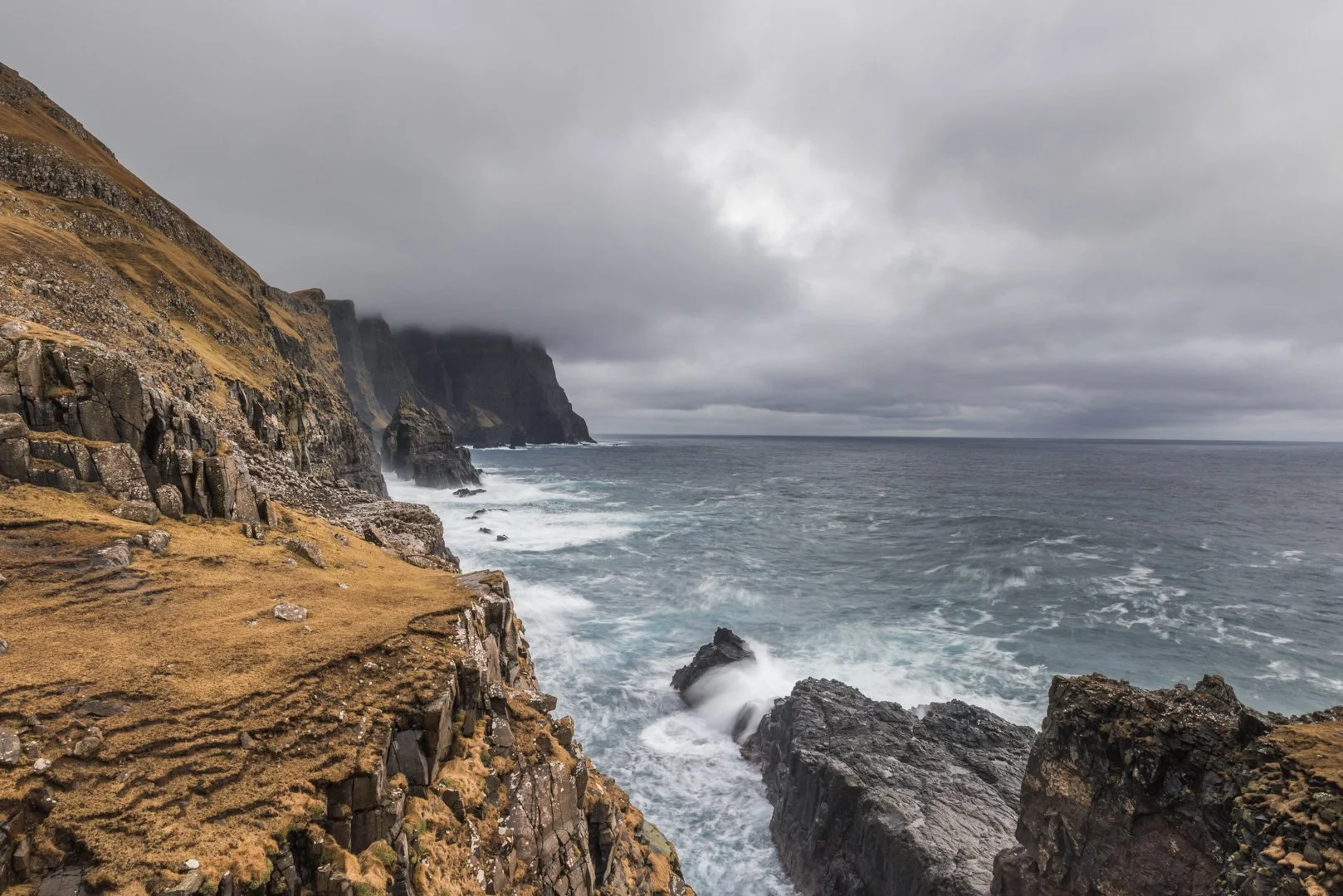
FAROE ISLANDS LANDSCAPE PHOTOGRAPHY WORKSHOP
20–27 April 2027
Spring light, longer days and wonderfully unpredictable weather
8 Days / 7 Nights · Maximum 4 Photographers · Private Bedroom · Breakfast & Evening Meals Included
Approximately £2,995 / $4,050 / €3,485 / 26,050 DKK per person
£500 equivalent deposit secures your place
APRIL IN THE FAROE ISLANDS
April is when the Faroe Islands really begin to wake up after winter.
The days are considerably longer, the landscape is turning beautifully green and waterfalls continue to spill down the mountains after the wetter winter months.
But this is still the North Atlantic.
Spring sunshine can disappear behind cloud. Mist can wrap itself around a mountain. Rain can move through a valley and, occasionally, winter can remind us that it hasn't gone completely.
For landscape photography, that's exactly what makes April interesting.
We have more daylight to explore, but we still have the changing weather, atmosphere and dramatic conditions that make photographing the Faroes so addictive.
Spring may have arrived, but the islands haven't suddenly become predictable.
WHY PHOTOGRAPH THE FAROE ISLANDS IN SEPTEMBER?
The islands are still wonderfully green
One of the defining features of the Faroe Islands is the extraordinary green landscape.
In early September, the mountains and valleys still retain much of their summer colour, giving us beautiful contrast against dark cliffs, traditional villages and the Atlantic Ocean.
It's a fantastic time for sweeping landscape photography.
Softer, lower light
By September, the very long summer days are beginning to shorten.
For photography, that's a good thing.
The sun sits lower in the sky, creating longer shadows and bringing more shape and texture into the mountains.
Instead of relying entirely on a short sunrise or sunset window, interesting light can develop throughout the day.
And when the sun breaks through moving Atlantic cloud, things can change very quickly.
Summer meets autumn
September sits right on the transition between seasons.
Some days can still feel like summer.
Others give us the first proper taste of autumn.
The air becomes cooler, weather systems become more noticeable and the landscape begins taking on slightly warmer tones.
That transition gives September its own photographic character.
Mist, rain and dramatic skies
Perfect weather isn't necessarily perfect photography.
Some of my favourite conditions in the Faroe Islands arrive when the forecast looks less than encouraging.
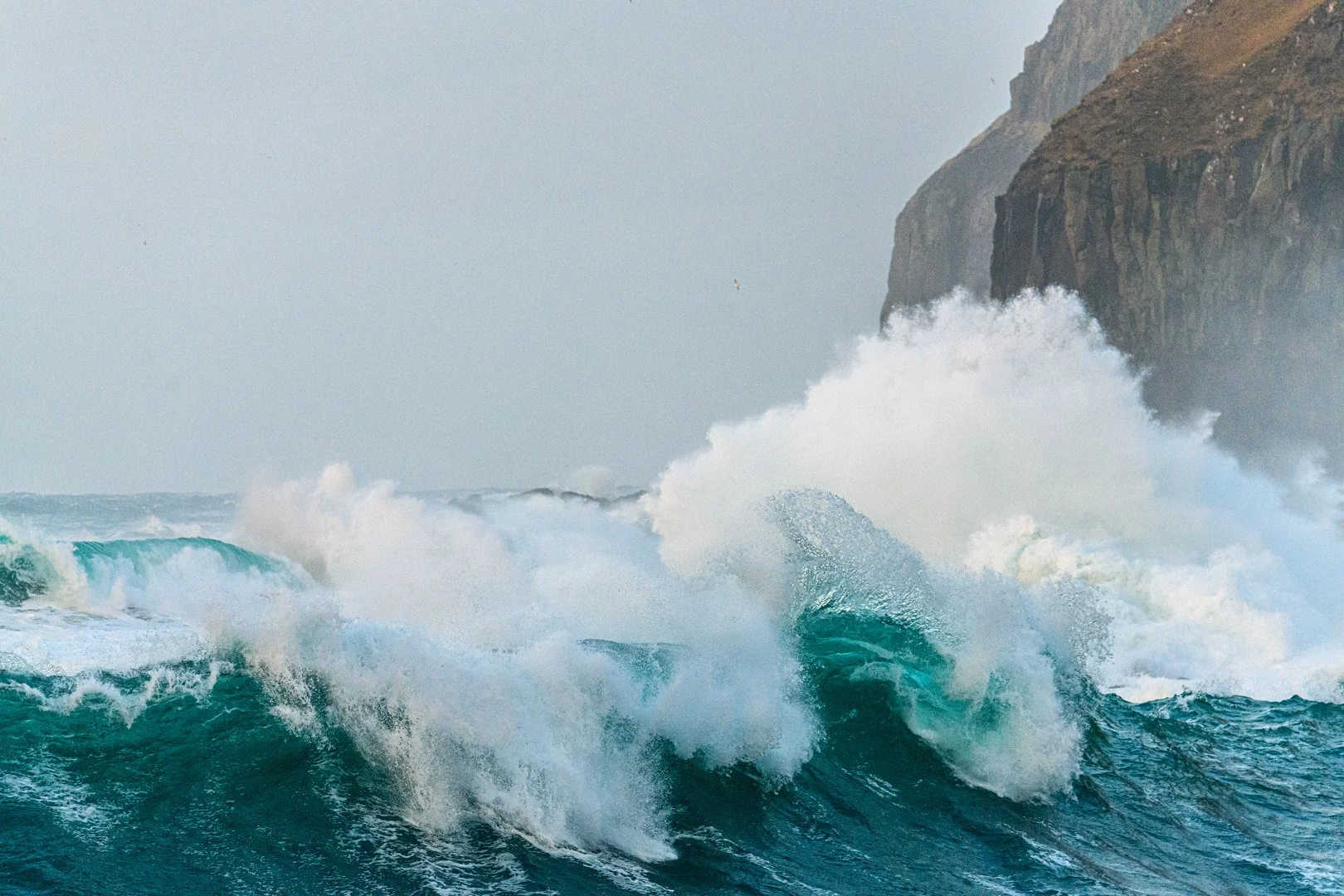
Low cloud moving across the mountains.
Mist appearing and disappearing around villages.
Rain passing across the landscape.
Sunlight suddenly breaking through a dark sky.
September can give us plenty of those opportunities.
And rather than waiting for the weather to become "nice", we'll use whatever conditions we have.
Plenty of daylight to explore
September still gives us enough daylight to travel further and spend plenty of time exploring different parts of the islands.
That gives us flexibility.
We can scout locations, wait for conditions to develop and change direction when the weather gives us a better opportunity elsewhere.
We're not racing around trying to photograph as many places as possible.
We have time to actually work with a location.
Quieter than peak summer
By September, the busiest part of the summer season is beginning to ease.
The islands gradually become quieter, while the landscapes remain wonderfully accessible.
For photography, that's a lovely balance.
Beautiful green scenery, plenty of daylight and a little more breathing room at some of the better-known locations.
WHAT COULD WE PHOTOGRAPH?
I don't operate with a fixed list of locations that we have to tick off.
Instead, I'll watch the weather, wind, cloud, tides and road conditions and decide where I believe we'll have the strongest photographic opportunities.
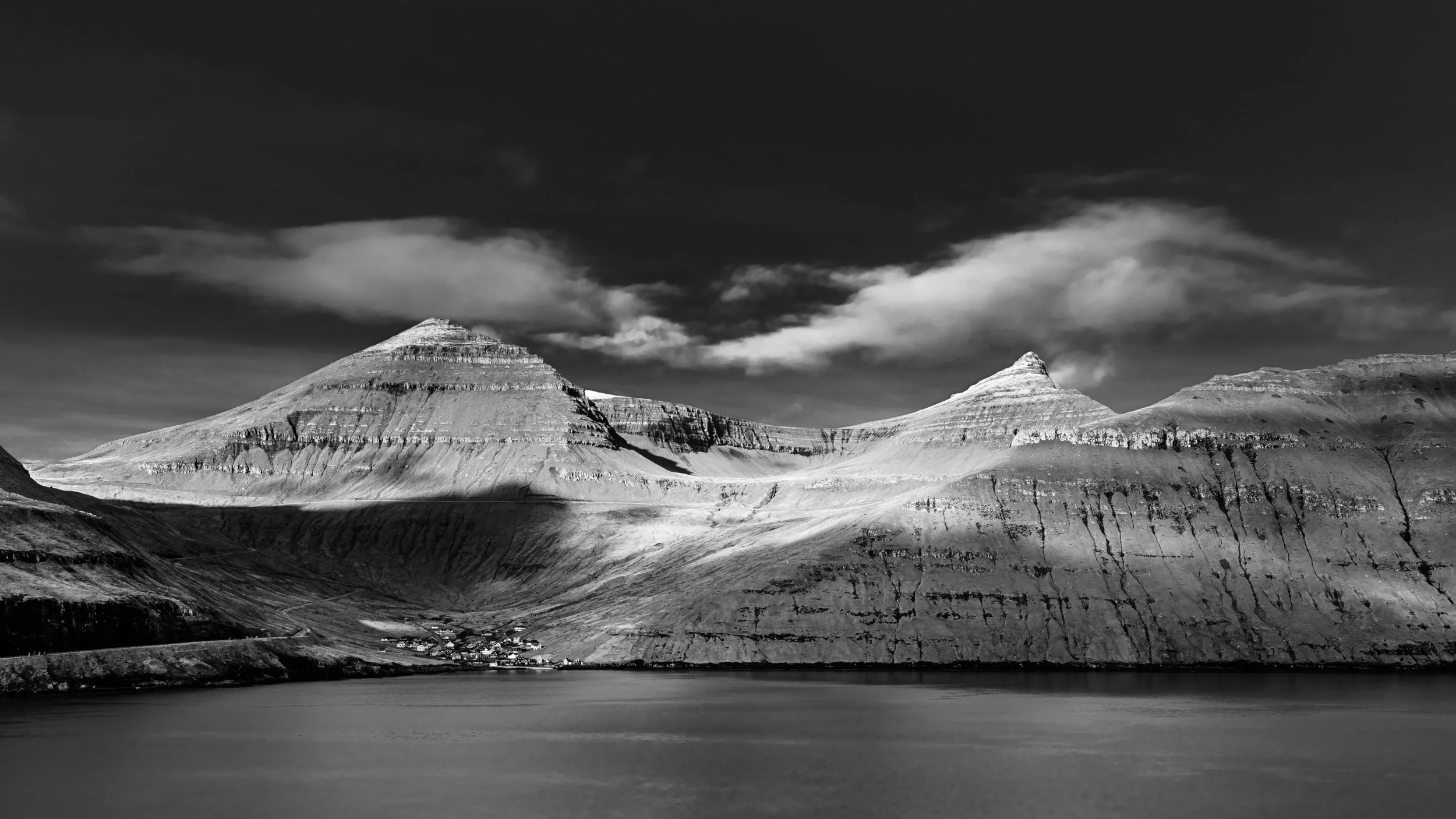
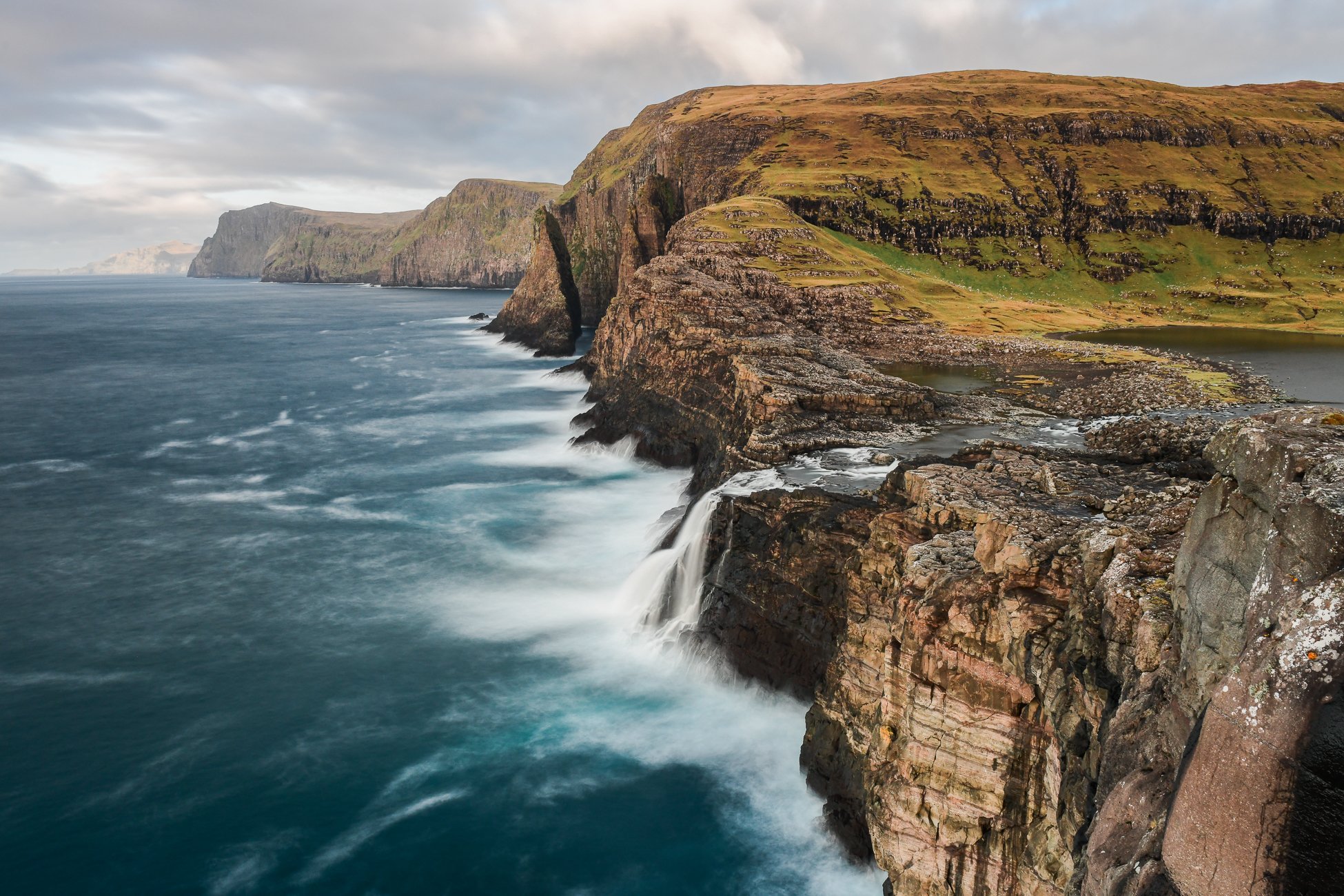
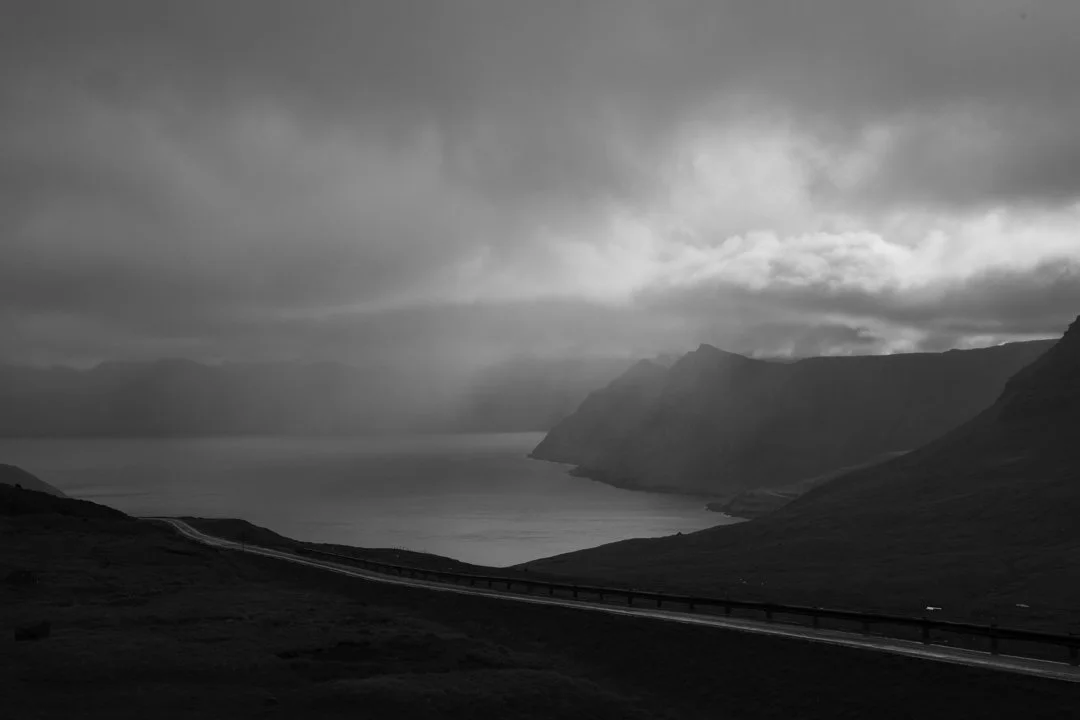
During the week we may photograph dramatic sea cliffs, waterfalls, green mountains, beaches, traditional villages, fjords and some of the famous landscapes that first made many of us want to visit the Faroe Islands.
Places such as Gásadalur, Bøur, Saksun, Tjørnuvík, Gjógv, Funningur, Norðradalur, Kalsoy and Vágar may all feature.
Depending on conditions, access and ferry schedules, we may also have opportunities to travel further afield.
But I also want to take you beyond the obvious viewpoints.
I've been photographing the Faroe Islands since 2012 and now live here year-round.
Sometimes the best photograph of the week won't come from one of the famous locations.
It'll come from wherever the weather is doing something extraordinary that day.
PHOTOGRAPHY IN SEPTEMBER
This workshop is particularly well suited to photographers interested in:
Sweeping green landscapes
Dramatic coastal photography
Telephoto landscapes
Waterfalls and moving water
Long-exposure seascapes
Working with mist and low cloud
Changing directional light
Mountain layers and atmospheric conditions
Traditional villages within the landscape
Sunrise, sunset and blue-hour photography
Throughout the week I'll be there whenever you want another pair of eyes — whether that's discussing a composition, working with difficult light, photographing in rain and mist or deciding how best to approach the conditions in front of us.
If you're happy working independently, I'll give you the space to do exactly that.
WE FOLLOW THE CONDITIONS
You won't receive an itinerary that says:
Tuesday, 10:00 — photograph this waterfall.
The Faroese weather would find that hilarious.
Instead, I'll make decisions based on the conditions we're actually experiencing.
Sometimes we'll decide our plan the night before.
Sometimes we'll change it over breakfast.
And sometimes I'll be driving towards one location, look across towards another island and completely change our plans.
That's part of photographing the Faroes properly.
We're not here to tick locations off a list.
We're here to find the best photographs we can make during those eight days.
A SMALL GROUP OF JUST FOUR PHOTOGRAPHERS
I've limited this workshop to a maximum of four photographers.
That gives me time to work individually with everyone when they want advice, while still giving experienced photographers plenty of freedom to work independently.
It also gives us something equally important in the Faroe Islands:
Flexibility.
Four photographers can move quickly.
We can change plans, react to the weather and give everyone room to find their own compositions rather than creating a small forest of tripods at every viewpoint.
A WEEK IN THE FAROE ISLANDS
This isn't simply about collecting photographs.
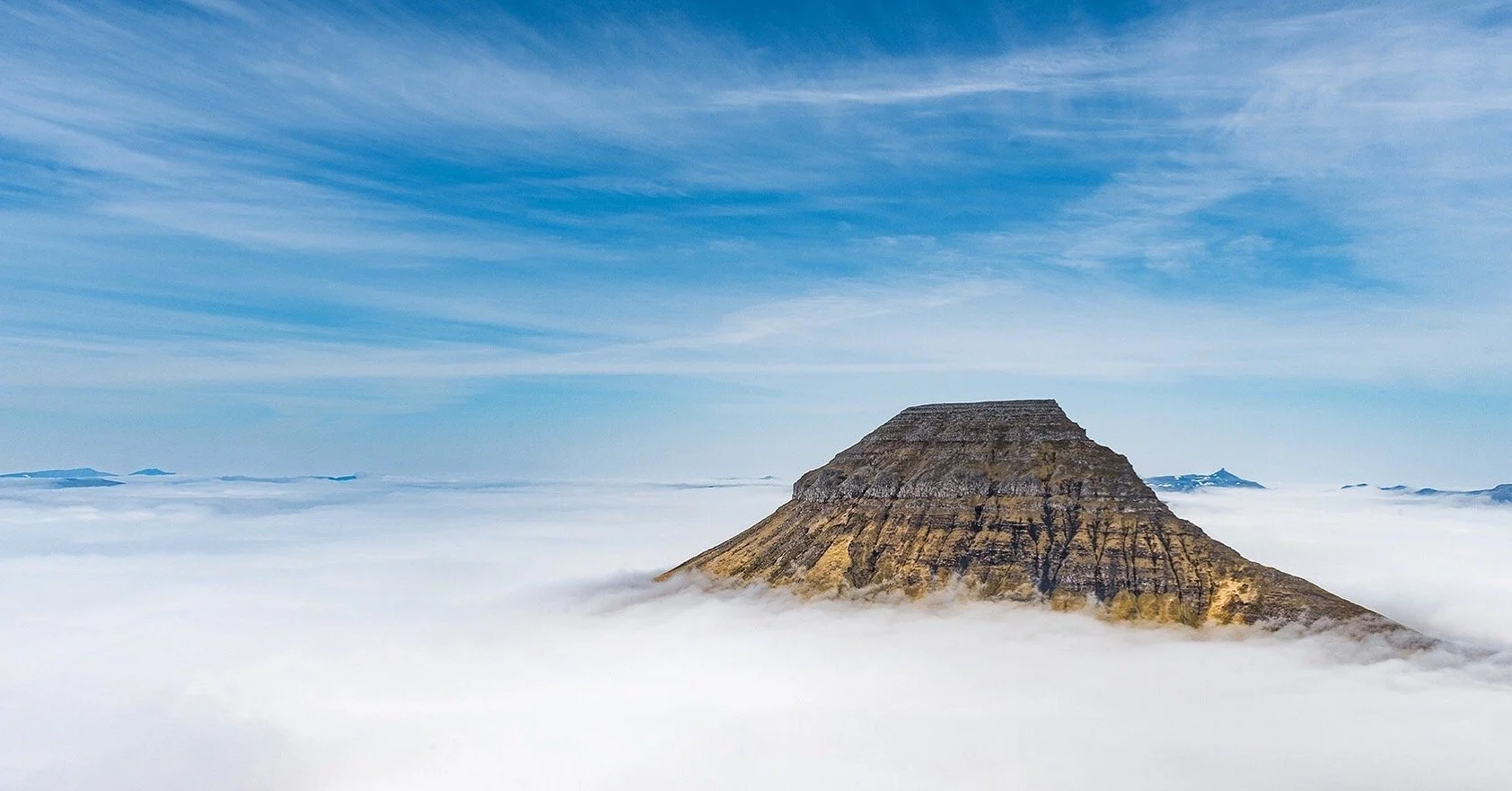
We'll spend eight days exploring a small group of islands in the middle of the North Atlantic, living together in our workshop house, eating together, talking photography and heading out whenever the conditions give us an opportunity.
September gives us enough daylight to explore without the extremely long days of midsummer.
That means we can travel, photograph and wait for conditions while still having time to come back to the house, eat and look through our images.
Some days will be sunny.
Some will be wet.
Some will probably involve staring through a windscreen at a mountain completely hidden by cloud.
And then, quite possibly, we'll drive through a tunnel and discover completely different conditions on the other side.
That's the Faroes.
And that's exactly why I love photographing them.
SEPTEMBER WORKSHOP FAQs
-
No.
My workshops are suitable for photographers with different levels of experience.
You might still be getting comfortable with manual exposure and filters, or you may have been photographing landscapes for years.
With a maximum of only four photographers, I can offer as much or as little photography guidance as each person wants.
-
September is a transition between summer and autumn.
Typical temperatures are around 7–12°C, but conditions can change quickly.
Sunshine, rain, mist, wind and low cloud are all possible — sometimes within a remarkably short period.
Good waterproof clothing, proper walking boots and several warm layers are essential.
I'll send you a detailed equipment and clothing guide before the workshop.
-
Yes.
Early September normally retains much of the rich green landscape associated with the Faroese summer, although the first warmer autumn tones may also begin to appear.
That transition is one of the things I particularly like about this time of year.
-
There can still be around 13 hours of daylight during September, although the days are shortening as we move towards autumn.
For photography, I think that's a lovely balance.
We have plenty of time to explore while the sun is also beginning to sit lower in the sky.
-
Generally, yes.
September sits outside the busiest part of the summer season, so the islands begin to feel quieter while we still retain good access and useful daylight.
Of course, famous locations can still attract visitors.
That's another reason I prefer working with a group of only four photographers.
-
We photograph.
Rain doesn't automatically mean putting the camera away.
Passing showers, mist, wet foregrounds and dramatic skies can produce some wonderful conditions.
I'll help whenever you want advice on working with rain or difficult light, and we'll change locations if I think conditions are significantly better elsewhere.
COME AND PHOTOGRAPH SEPTEMBER IN THE FAROE ISLANDS WITH ME
7–14 September 2027
8 Days / 7 Nights
Maximum 4 Photographers
Private Bedroom
Breakfast & Evening Meals Included
Approximately £2,995 / $4,050 / €3,485 / 26,050 DKK per person
£500 equivalent deposit secures your place
Eight days photographing green landscapes, changing weather and beautiful late-summer light as the Faroe Islands begin their transition towards autumn.