
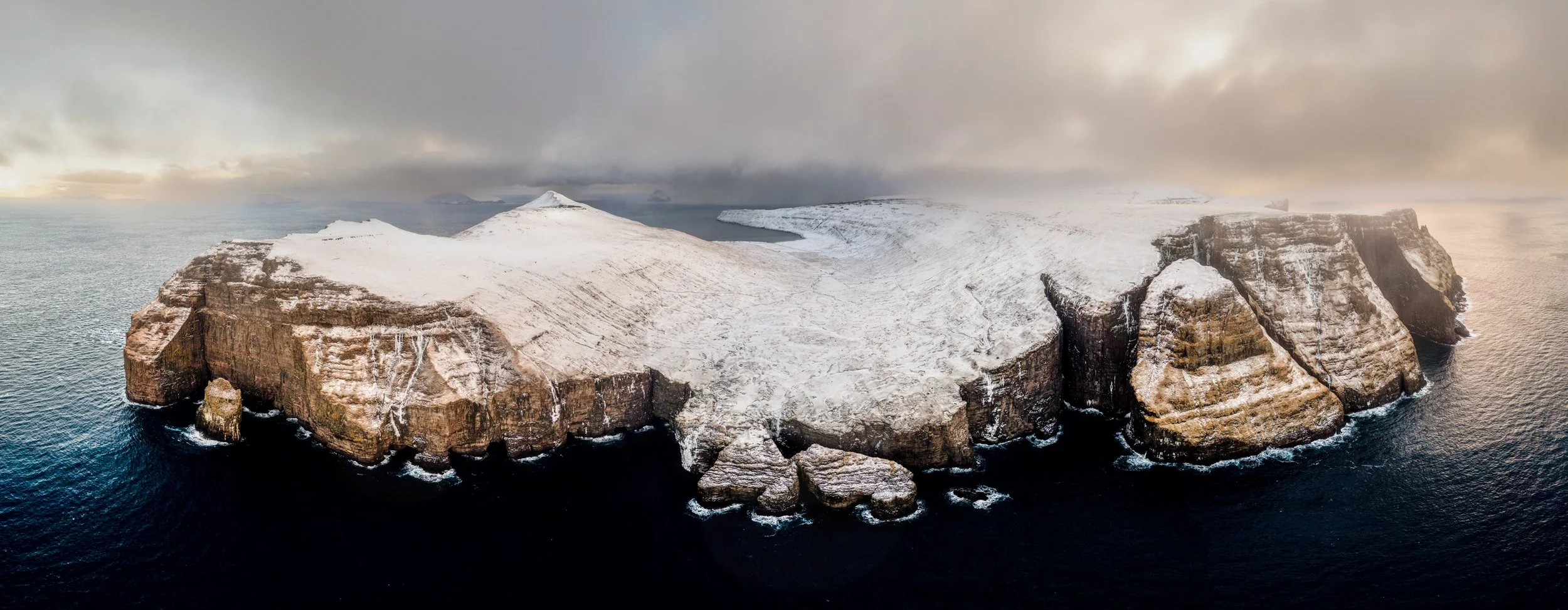
FAROE ISLANDS LANDSCAPE PHOTOGRAPHY WORKSHOP
27 November–4 December 2027
Winter light, wild Atlantic weather and long northern nights
8 Days / 7 Nights · Maximum 4 Photographers · Private Bedroom · Breakfast & Evening Meals Included
Approximately £2,995 / $4,050 / €3,485 / 26,050 DKK per person
£500 equivalent deposit secures your place
OCTOBER IN THE
FAROE ISLANDS
October is when the Faroe Islands begin to feel properly wild again.
The days are shorter, the sun sits lower in the sky and Atlantic weather becomes a much bigger part of the landscape.
For photography, I love it.
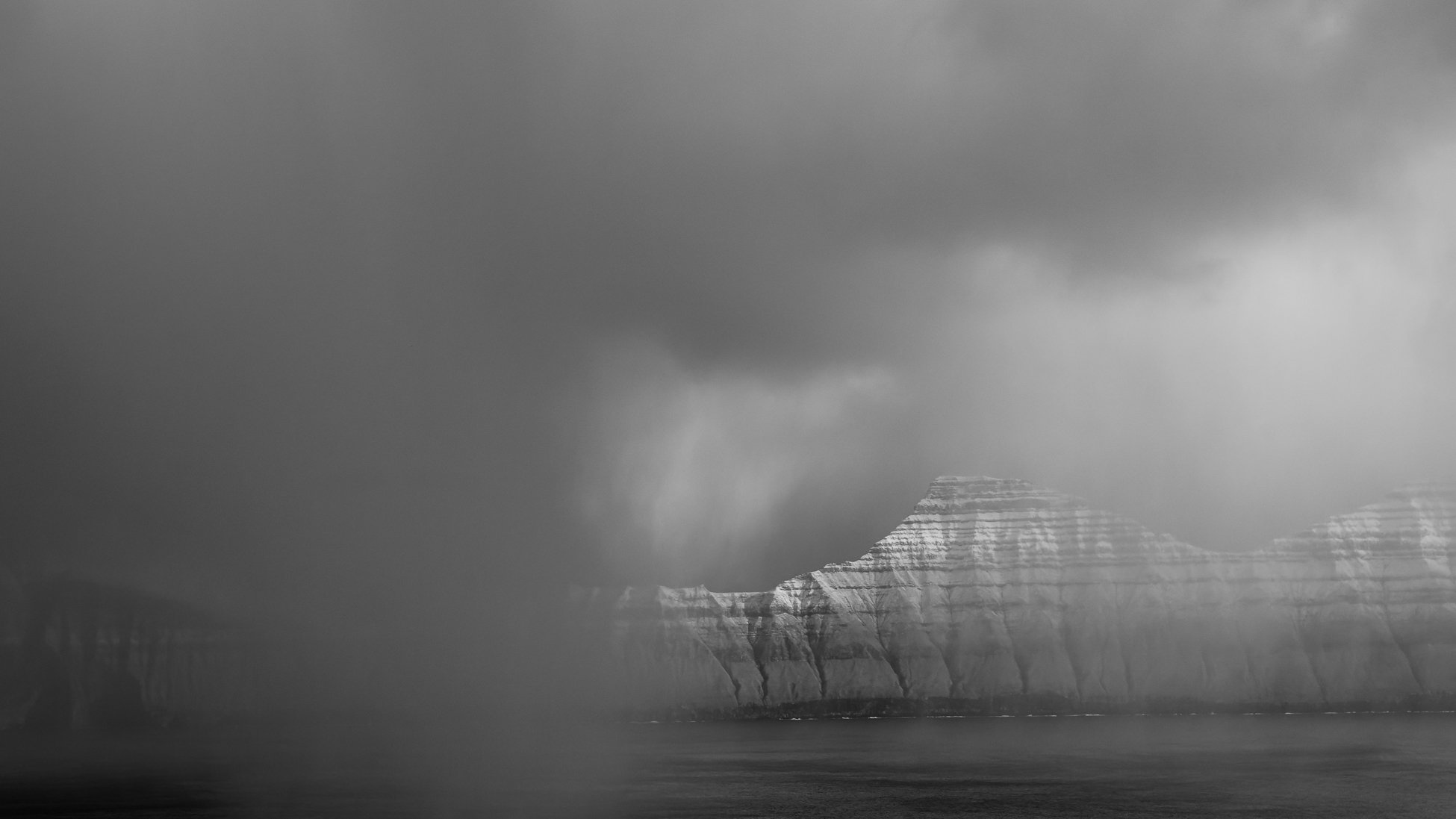
Dark clouds move across the mountains. Waterfalls become more powerful. Rain passes through the valleys and the lower sun can suddenly break underneath a weather front and light up the landscape.
The islands are quieter too.
There are fewer visitors, less pressure to rush between locations and more opportunity to simply find a composition and wait to see what the weather does.
October isn't about chasing perfect weather.
It's about embracing atmosphere, changing light and whatever the North Atlantic decides to give us.
WHY PHOTOGRAPH THE FAROE ISLANDS IN WINTER?
Beautiful low winter light
One of the biggest reasons I love photographing the Faroes at this time of year is the light.
The sun stays low throughout the day.
That means long shadows, beautiful side-light and much more texture across the mountains.
Rather than waiting for the sun to drop towards the horizon at the end of the day, we can potentially work with low-angle light for much of the limited daylight we have.
Winter gives us fewer hours.
But those hours can be wonderful.
Short days aren't a disadvantage
By late November and early December, daylight is limited.
And for landscape photography, I don't necessarily see that as a bad thing.
We're not trying to photograph from 5am until midnight.
Instead, we can concentrate on the strongest part of the day, work carefully with a location and spend more time thinking about what we're making.
Then, once the daylight disappears, we head back to the house, warm up, eat together, back up photographs and look through what we've captured.
Unless the night sky decides to put on a show.
Then we're probably going back outside.
Wild Atlantic weather
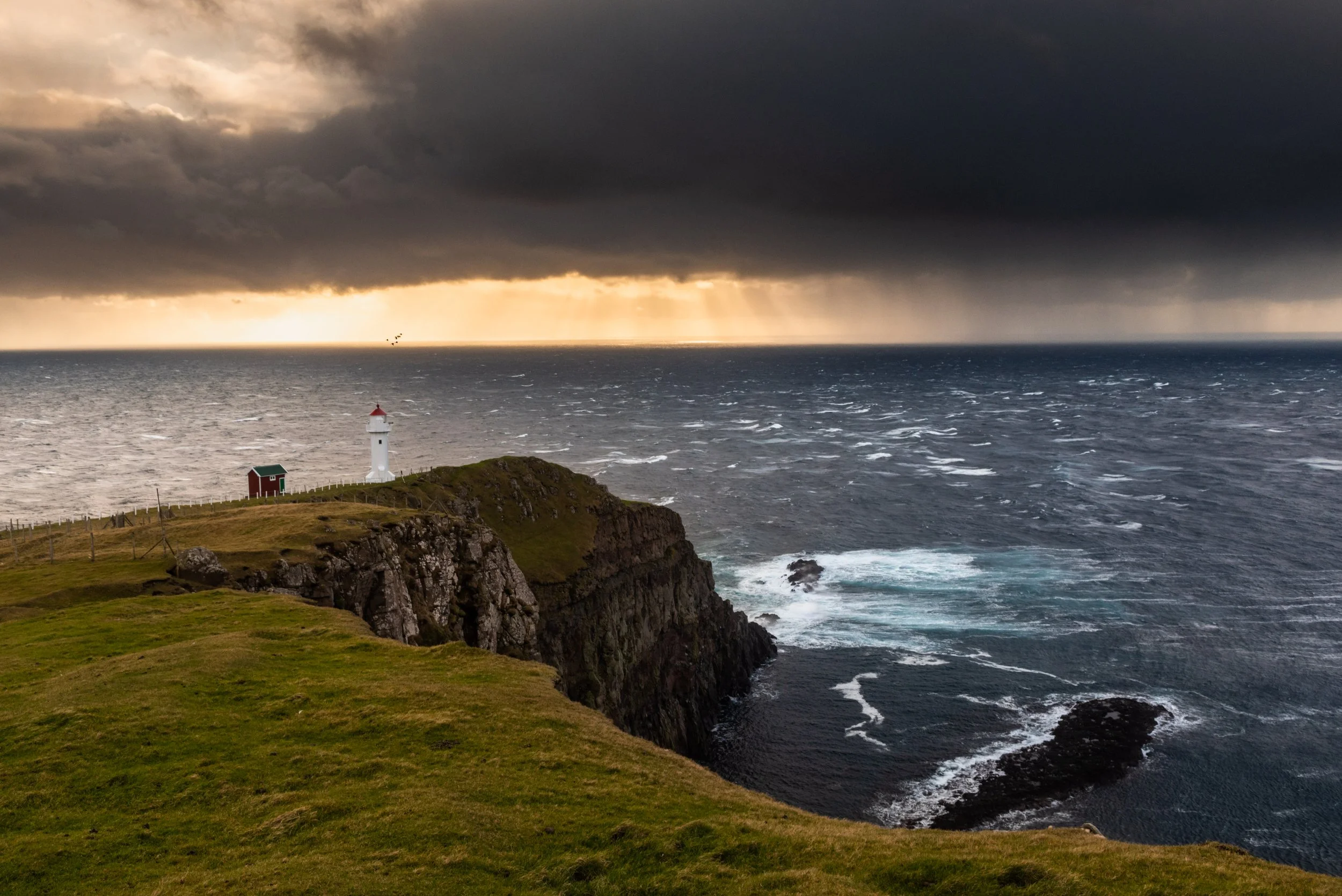
Winter weather in the Faroes can be dramatic.
Wind.
Rain.
Mist.
Low cloud.
Atlantic storms.
And occasionally snow.
For some people, that sounds like terrible photography weather.
For me, it's often when the landscape becomes most interesting.
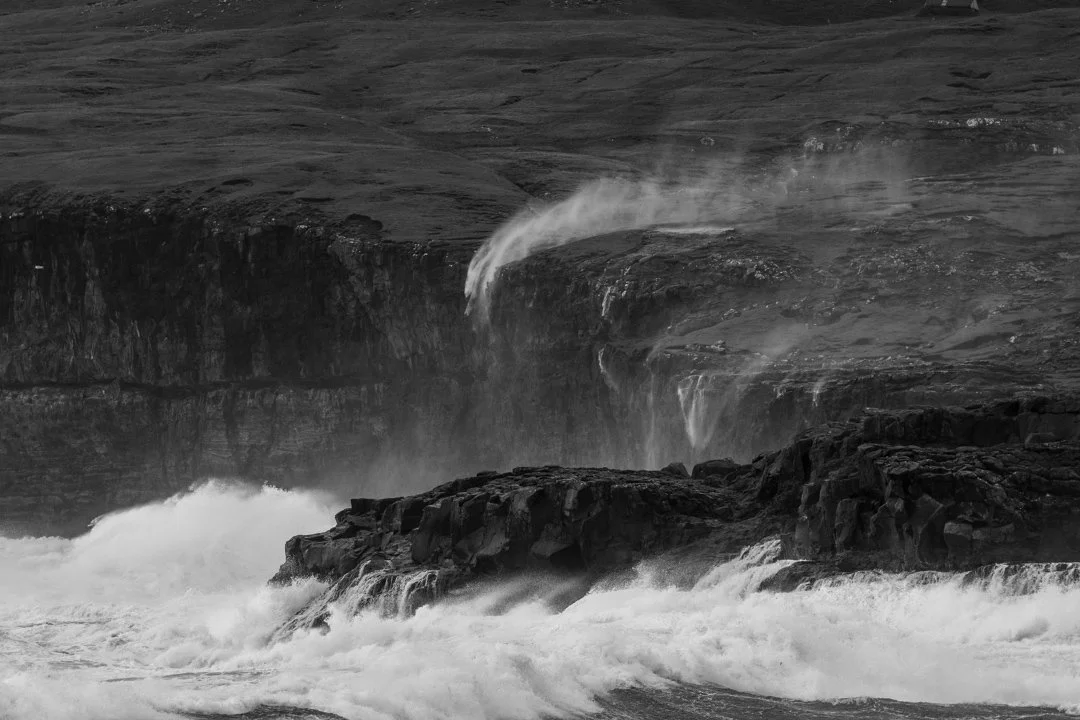
Dark skies, shafts of light, moving cloud and waves crashing against the coastline can completely transform familiar locations.
The weather isn't something we're trying to avoid.
It's part of what we've come to photograph.
Waterfalls everywhere
Winter rainfall brings the landscape alive with water.
The famous waterfalls become powerful, but you'll also see countless smaller falls appearing down mountainsides after rain.
Some have names.
Many don't.
They give us endless opportunities to work with shutter speed, movement, foregrounds and weather.
And on particularly windy days, you may even see waterfalls attempting to go back uphill.
Welcome to winter in the Faroe Islands.
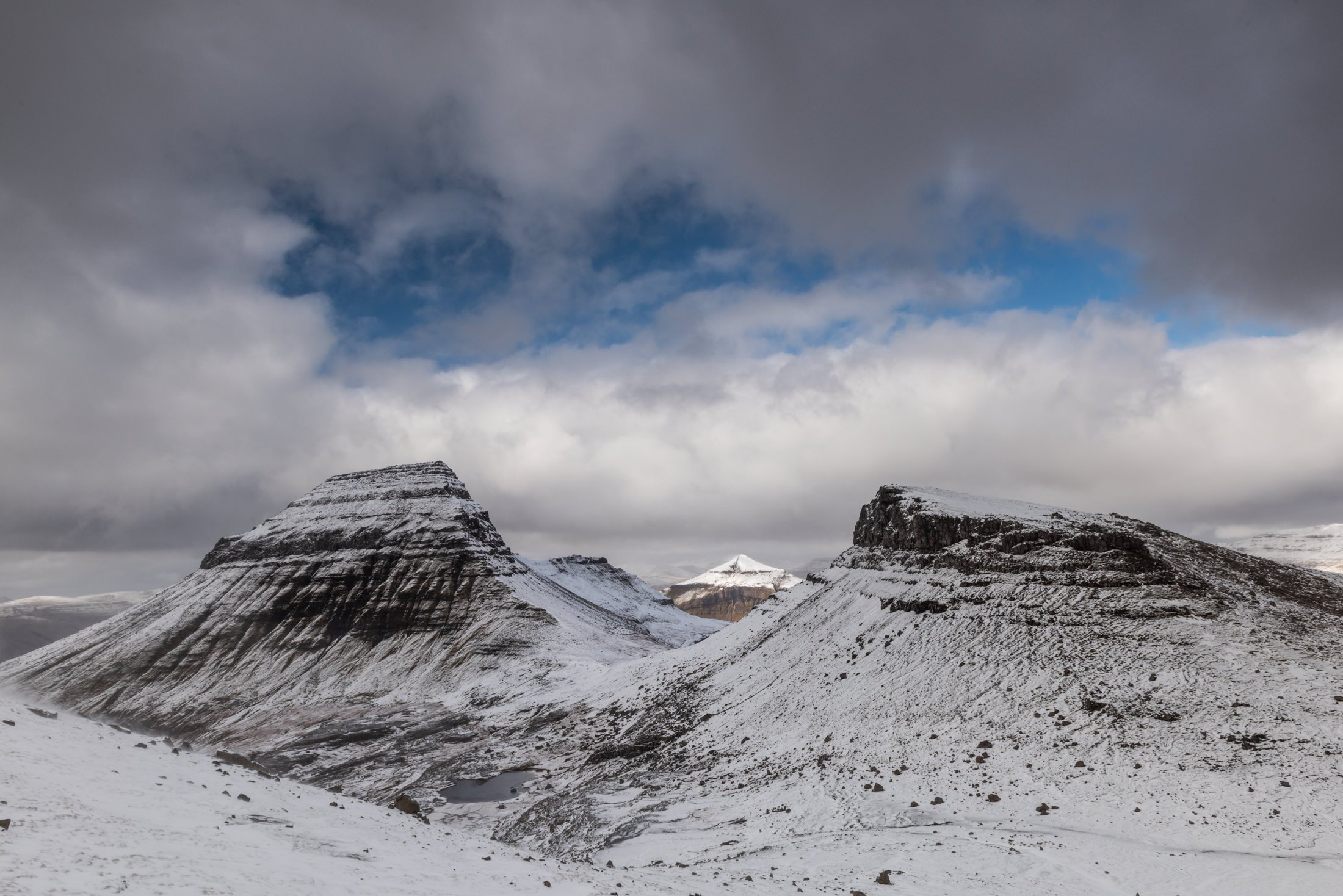
Snow — if we're lucky
Snow can happen during this workshop, particularly on higher ground.
But I won't promise it.
The Faroe Islands have a relatively mild maritime winter, and snow at sea level often doesn't stay around for long.
When it does arrive, though, it can completely transform the landscape.
Green mountains become white overnight.
Rock and cliff edges become more defined.
And familiar locations suddenly look completely different.
If snow appears, we'll make the most of it.
Long blue hours
Winter isn't only about dramatic daylight.
The transition between day and night can be one of the most beautiful times to photograph.
The longer winter twilight gives us opportunities to work with blue-hour landscapes, villages beginning to light up and long exposures along the coast.
These quieter periods can produce very different photographs from the big dramatic daytime scenes.
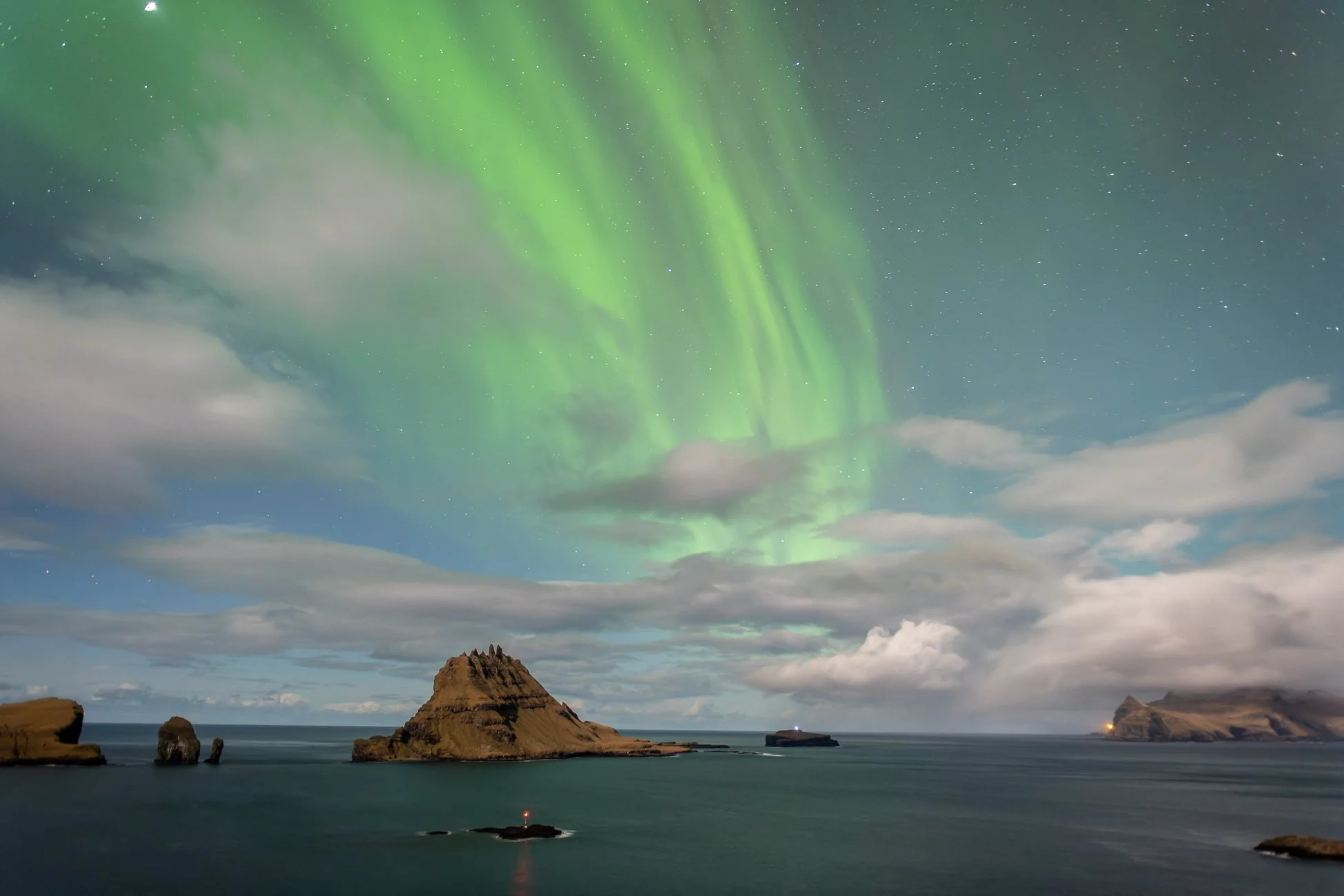
And perhaps… the Northern Lights
Late November and early December give us long, dark nights.
That means there is a possibility of seeing and photographing the Northern Lights.
But this is important:
This is not sold as a Northern Lights workshop.
Aurora activity, clear skies and timing all need to cooperate.
Nothing can be guaranteed.
But I'll be watching the forecasts.
And if the conditions line up while we're together, we'll go.
WHAT COULD WE PHOTOGRAPH?
I don't operate with a fixed list of locations that we have to tick off.
Winter conditions make flexibility even more important.
I'll continually monitor the weather, wind, road conditions, daylight and cloud cover and decide where I believe we'll have the strongest photographic opportunities.
During the week we may photograph dramatic sea cliffs, powerful waterfalls, mountains, winter villages, beaches, fjords and some of the famous landscapes that first made many of us want to photograph the Faroe Islands.
Places such as Gásadalur, Bøur, Saksun, Tjørnuvík, Gjógv, Funningur, Norðradalur and Vágar may all feature.
Other locations will depend entirely on winter access and conditions.
And that's fine.
We're not coming here with a checklist.
We're coming to photograph winter in the Faroe Islands as it actually happens.
PHOTOGRAPHY IN WINTER
This workshop is particularly well suited to photographers interested in:
Dramatic landscape photography
Low winter light
Moody and atmospheric conditions
Waterfalls and moving water
Long-exposure seascapes
Working creatively with rain, mist and snow
Telephoto landscapes
Mountain layers and low cloud
Winter villages and blue-hour photography
Night photography
And, if conditions cooperate, Northern Lights photography
Throughout the week I'll be there whenever you want another pair of eyes — whether that's discussing a composition, working with difficult light, photographing in rain and mist or deciding how best to approach the conditions in front of us.
If you're happy working independently, I'll give you the space to do exactly that.
WE FOLLOW THE CONDITIONS
You won't receive an itinerary that says:
Tuesday, 10:00 — photograph this waterfall.
In winter, the Faroese weather would laugh even harder than usual.
Instead, I'll make decisions based on what is actually happening.
Sometimes we'll know our plan the evening before.
Sometimes we'll change it over breakfast.
Sometimes we'll drive through a tunnel and discover completely different weather on the other side.
And sometimes the wind or road conditions will simply tell us that today's original plan isn't happening.
That's fine.
There is almost always another option.
We don't fight the weather. We work with it.
A SMALL GROUP OF JUST FOUR PHOTOGRAPHERS
I've limited this workshop to a maximum of four photographers.
That gives me time to work individually with everyone when they want advice, while still giving experienced photographers plenty of freedom to work independently.
It also gives us something especially important in winter:
Flexibility.
Four photographers can move quickly.
We can change plans, react to light and weather and make sensible decisions when conditions change.
It also means nobody has to stand around waiting for twelve other people to pack away their tripods while the light disappears.
A WEEK IN THE WINTER FAROES
This isn't simply about collecting photographs.
We'll spend eight days experiencing the Faroe Islands during one of the quietest and most atmospheric times of year.
The days will be shorter than on my other workshops.
That changes the rhythm of the week.
We'll make the most of the available daylight, return to the house when conditions fade, eat together, look through photographs and plan for the following day.
And on clear nights, we'll keep one eye on the sky.
Winter here can feel wonderfully remote.
The famous viewpoints are quieter.
The villages settle into their normal rhythm.
The weather becomes more dramatic.
And you begin to understand why these little islands in the North Atlantic look the way they do.
For me, that's a very special time to photograph them.
WINTER WORKSHOP FAQs
-
No.
My workshops are suitable for photographers with different levels of experience.
You might still be getting comfortable with manual exposure and filters, or you may have been photographing landscapes for years.
With a maximum of only four photographers, I can offer as much or as little photography guidance as each person wants.
-
Typical winter temperatures are relatively mild for this latitude, generally around 3–8°C, but the wind can make it feel considerably colder.
Rain, mist, strong wind and rapidly changing conditions are all possible.
Snow may also occur, particularly on higher ground.
Good waterproof clothing, proper boots and several warm layers are essential.
I'll send you a detailed clothing and equipment guide before the workshop.
-
Late November gives us roughly seven hours of daylight, dropping towards approximately five hours as we move into December.
The days are short.
But the sun also stays very low, which can produce beautiful directional light throughout much of the day.
Rather than seeing the limited daylight as a disadvantage, we'll use it differently.
-
No.
Snow is certainly possible in winter, particularly on higher ground, but the Faroese climate is relatively mild and snow at sea level can disappear quickly.
If snow arrives during the workshop, we'll make the most of it.
If it doesn't, there will still be plenty to photograph.
-
Maybe.
Late autumn and winter provide the dark nights required for aurora photography, but we still need suitable solar activity and clear skies.
I will never guarantee Northern Lights.
This is primarily a landscape photography workshop.
But I'll monitor the forecasts and, if a genuine opportunity appears, we'll be ready.
-
Potentially.
Some locations, hikes, ferries or roads may not be sensible or accessible if conditions are poor.
That's why there is no fixed itinerary.
I'll assess the weather, road conditions and safety throughout the week and adapt the plan accordingly.
There is no photograph worth taking unnecessary risks for.
COME AND PHOTOGRAPH WINTER IN THE FAROE ISLANDS WITH ME
27 November–4 December 2027
8 Days / 7 Nights
Maximum 4 Photographers
Private Bedroom
Breakfast & Evening Meals Included
Approximately £2,995 / $4,050 / €3,485 / 26,050 DKK per person
£500 equivalent deposit secures your place
Eight days photographing low winter light, waterfalls, Atlantic weather and the raw landscape of the Faroe Islands at one of the quietest times of year.
And if the skies clear after dark, perhaps something green will appear above us too.