
FAROE ISLANDS LANDSCAPE PHOTOGRAPHY WORKSHOP
8–15 June 2027
Midnight light, endless days and photography through the night
8 Days / 7 Nights · Maximum 4 Photographers · Private Bedroom · Small-Group Photography Experience
Approximately £2,995 / $4,050 / €3,485 / 26,050 DKK per person
£500 equivalent deposit secures your place
JUNE IN THE FAROE ISLANDS
June is completely different from every other workshop I run.
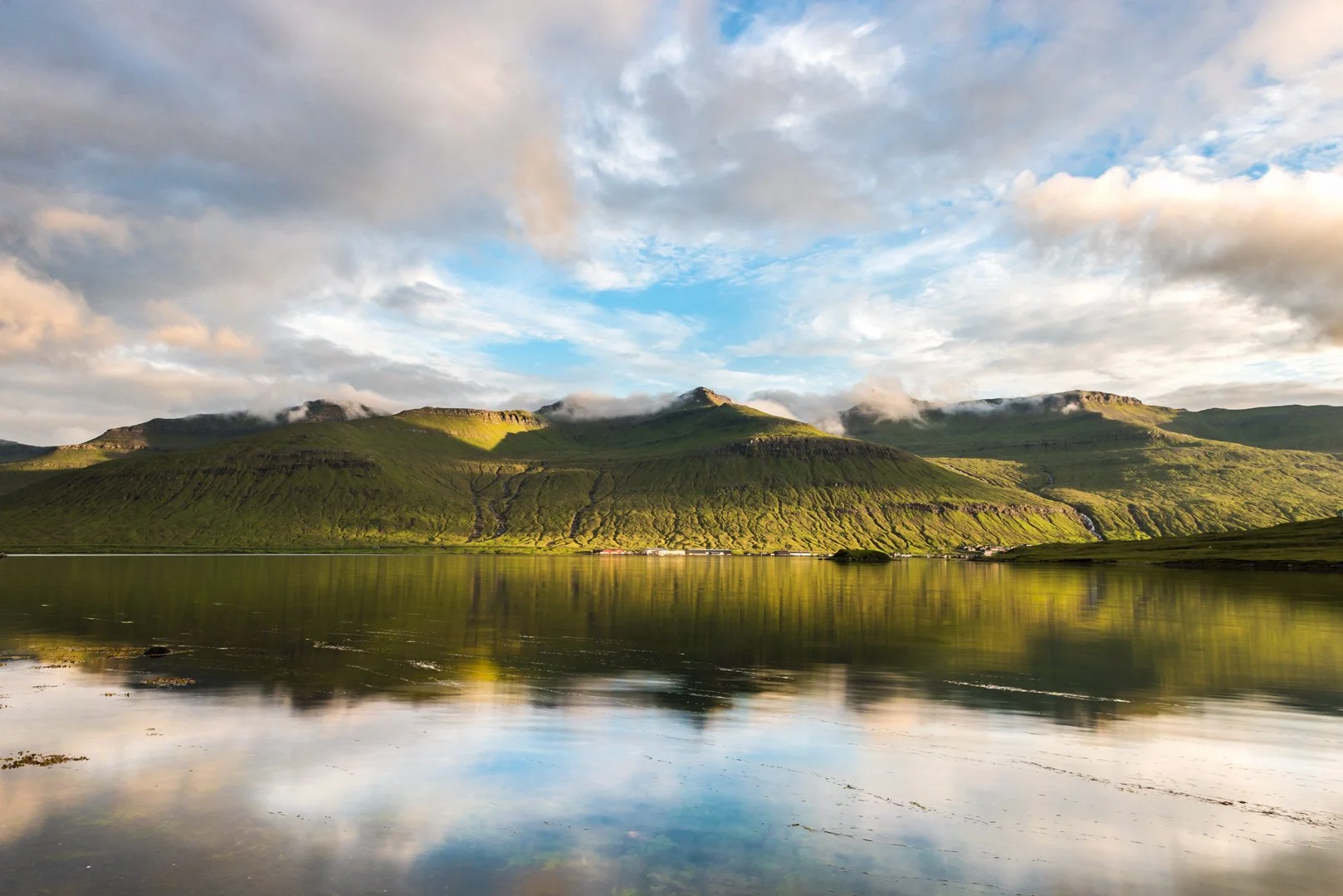
Around midsummer, the Faroe Islands barely get dark.
The sun drops towards the horizon late in the evening, leaving hours of soft colour and twilight before rising again only a few hours later.
For landscape photography, that completely changes how we approach the week.
Rather than getting up early, photographing sunrise, spending the day travelling and then waiting for sunset, we'll often turn the normal day upside down.
We'll head out later in the afternoon and photograph into the evening.
We'll work through sunset and the beautiful light around midnight.
And when the conditions are right, we'll simply keep going until sunrise.
Then we'll head back to the house, close the curtains and sleep during the day.
This is a workshop built around the light rather than the clock.
WHY PHOTOGRAPH THE FAROE ISLANDS IN MAY?
The islands are beautifully green
By May, the Faroese landscape is properly awake.
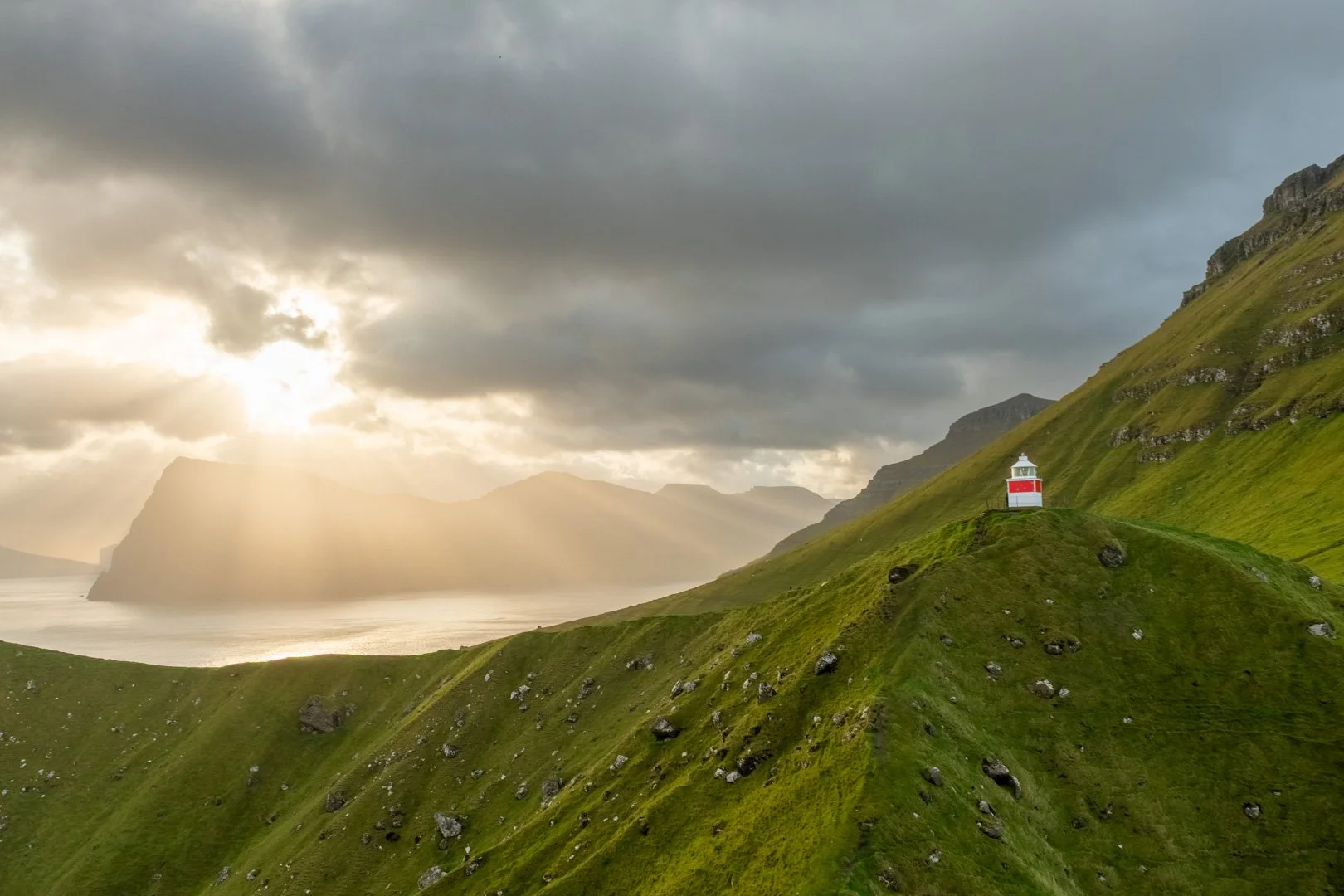
Fresh grass covers the mountains and valleys, creating that intense green the islands are famous for.
Against dark cliffs, waterfalls, colourful villages and the Atlantic Ocean, it gives us an incredible palette to work with.
If the classic green Faroe Islands landscape is what first made you want to visit, May is a wonderful time to experience it.
Incredibly long days
May brings long daylight hours.
That gives us much more freedom when planning our photography.
We can travel further, explore different islands, spend longer working a location and wait for conditions to develop without constantly watching the clock.
It doesn't mean we'll photograph non-stop from sunrise until bedtime.
Nobody needs that.
It simply means the daylight gives us options.
And in the Faroes, options are incredibly useful.
Mist, fog and atmosphere
May can bring some wonderfully atmospheric conditions.
Mist often moves through the islands, wrapping itself around mountains, cliffs and villages.
Sometimes a location can disappear completely.
Then the cloud begins to lift and suddenly small sections of the landscape appear through the mist.
Those moments can produce beautifully simple and atmospheric photographs.
Rather than being disappointed when the mountains disappear, we'll look for ways to photograph the conditions we actually have.
Spring waterfalls
Water is everywhere in the Faroe Islands.
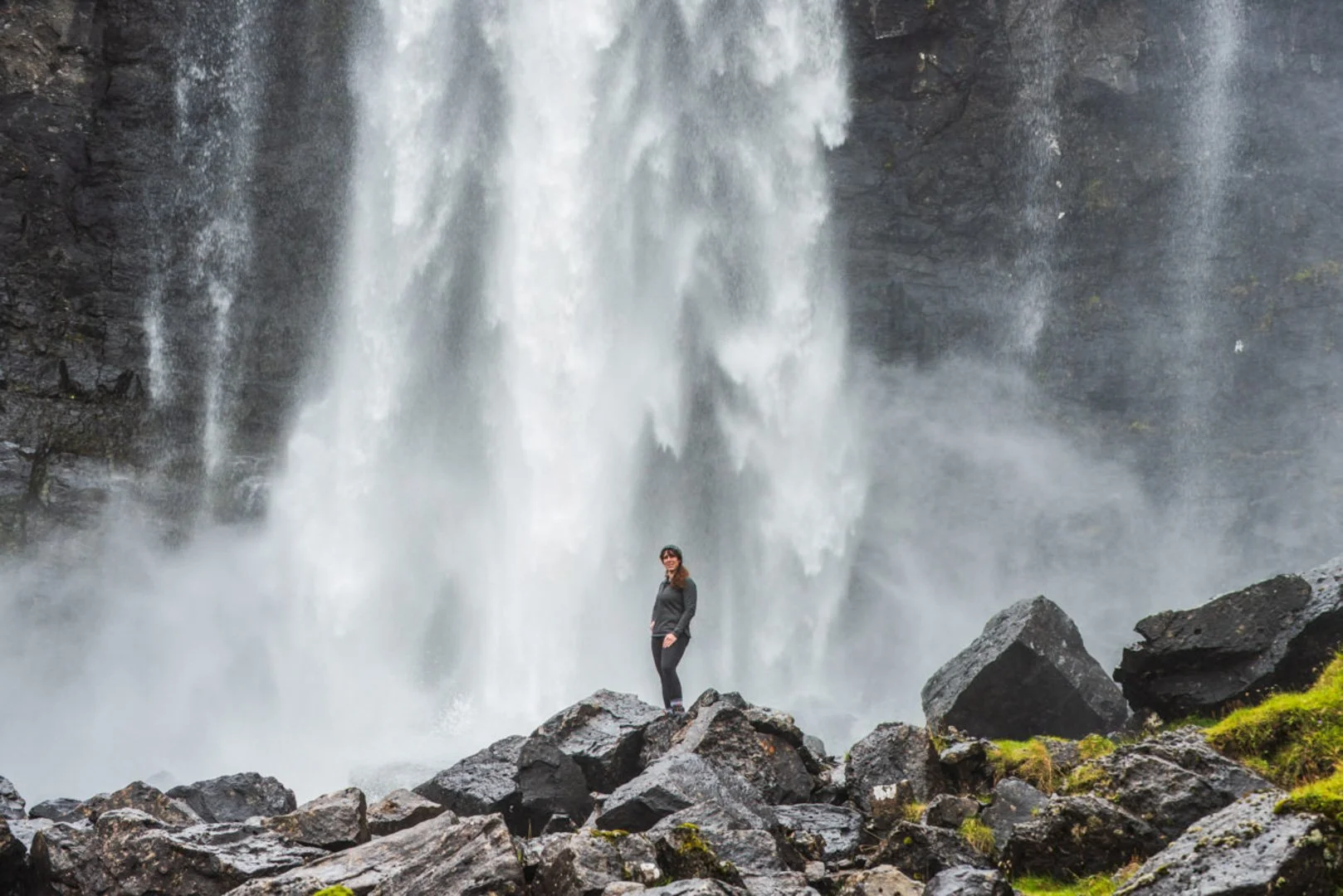
In May, waterfalls continue to flow across the mountainsides, giving us opportunities to photograph everything from the famous falls to smaller streams and cascades that most visitors drive straight past.
We'll work with shutter speed, foregrounds, weather and composition rather than simply collecting photographs of named locations.
Seabirds return
Spring also brings increasing bird activity back to the islands.
Puffins and other seabirds begin returning to their breeding areas from late April onwards, adding another dimension to the coastal landscape.
This isn't a dedicated wildlife workshop, and I won't promise specific sightings.
But if the timing, access and conditions give us an opportunity to photograph or simply experience the seabirds responsibly, we'll make the most of it.
Before the busiest part of summer
May sits just before the main summer season.
The days are already very long and the landscape is beautifully green, but the islands generally haven't yet reached the busiest part of the year.
For photography, I think that's a fantastic balance.
WHY PHOTOGRAPH THE FAROE ISLANDS IN JUNE?
The midnight light
June gives us the longest days of the year.
The sun sets very late and rises again only a few hours later, with the sky often remaining light throughout the night.
That means we're not chasing a ten-minute sunset.
We can have hours of slowly changing colour, soft light and long twilight.
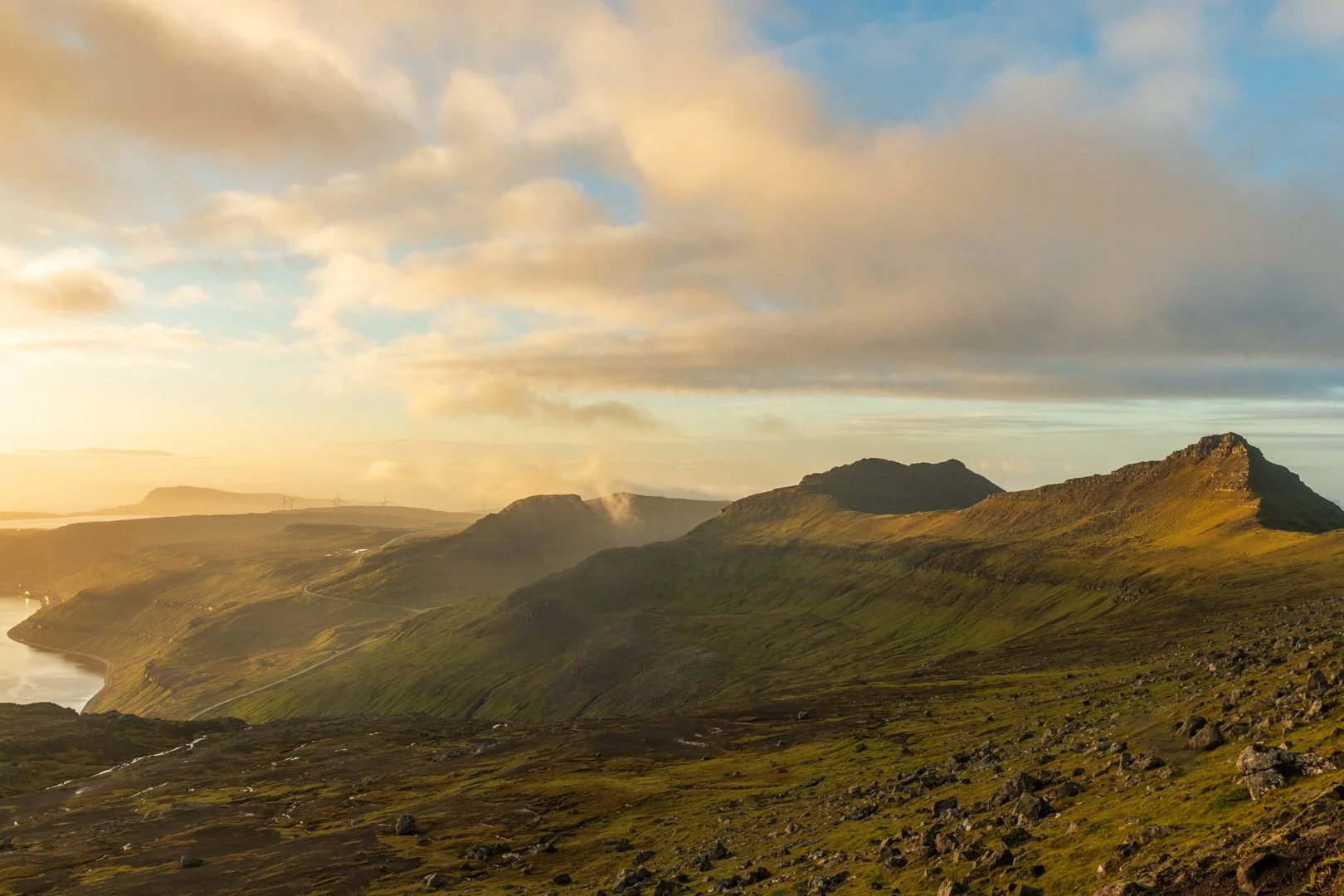
The mountains catch light from angles we simply don't see during the middle of the day.
The Atlantic takes on softer colours.
Villages begin to glow beneath the evening sky.
And sometimes the best light arrives when most visitors have already gone to bed.
We photograph when everyone else is sleeping
This is one of the things I'm most excited about with the June workshop.
Our photography day may not properly begin until late afternoon.
We'll head out as other people are beginning to think about dinner.
We'll photograph through the evening, sunset and the long twilight around midnight.
And if the weather and light are working, we'll keep going.
There may be mornings when we're still standing beside our tripods as the sun comes back up.
Then we return to the house and sleep.
It's an unusual rhythm.
But we're coming here to photograph the Faroe Islands in midsummer — not to maintain a normal bedtime.
The islands are incredibly green
By June, the Faroese landscape is at its lushest.
Green mountains rise directly from the Atlantic.
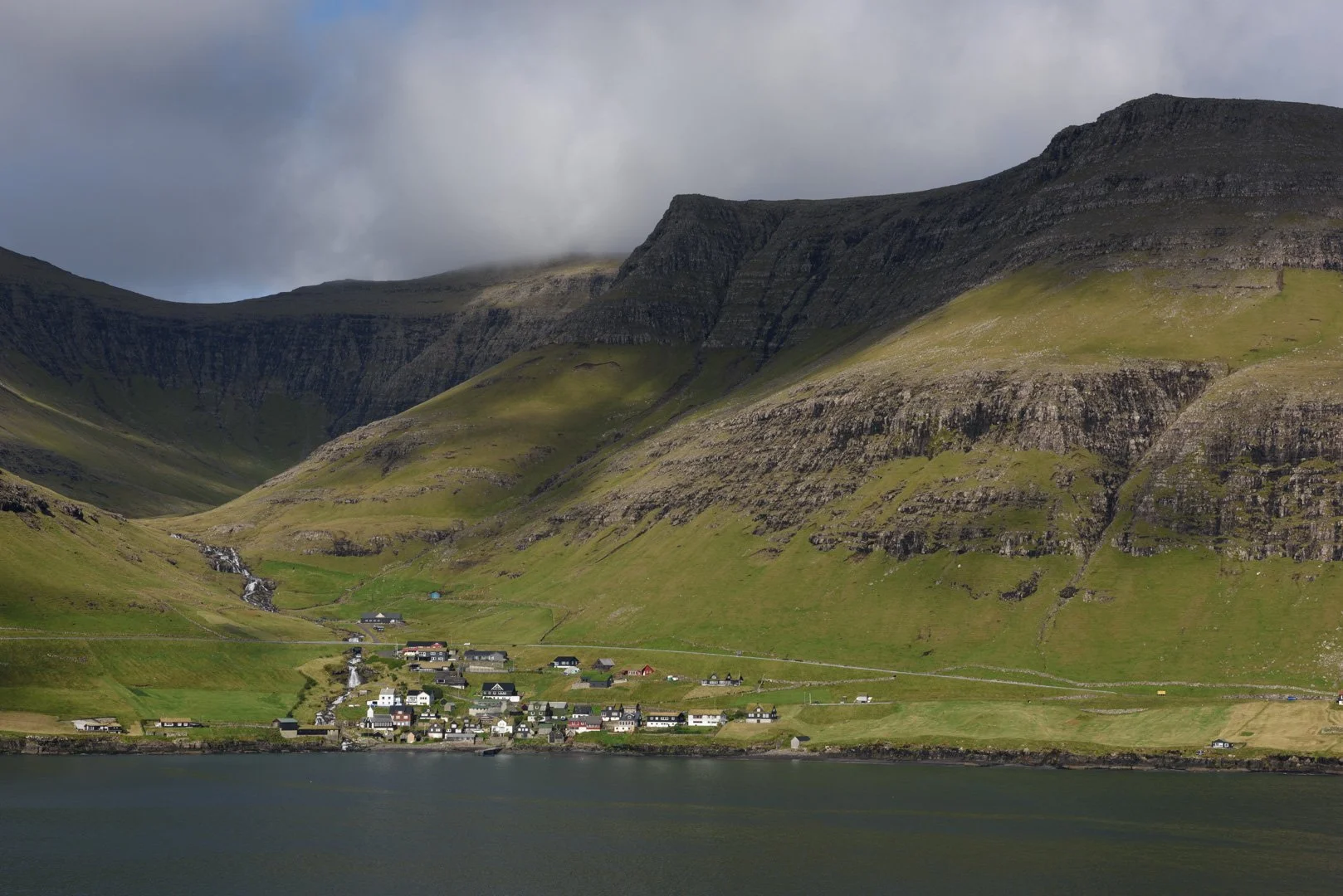
Villages sit beneath enormous cliffs.
Waterfalls cut through the landscape and the long summer light brings out texture across the hillsides.
This is the classic green Faroe Islands landscape many photographers imagine before they ever visit.
Golden light that lasts
One of the most exciting things about midsummer isn't simply how late the sun sets.
It's how slowly the light changes.
The sun moves low across the horizon, creating long periods of softer directional light.
Cloud and mist can catch warm colour.
Mountain ridges can stay illuminated for much longer than they would at other times of year.
And because sunset and sunrise are so close together, one can almost flow into the other.
Sometimes there's barely an obvious end to the photographic day.
Mist and summer weather
June doesn't guarantee clear skies.
And I wouldn't want it to.
Mist wrapping around mountains, cloud moving across cliffs and rain passing through the landscape can create some of the most atmospheric conditions we photograph.
The difference is that we have an enormous amount of daylight to work with.
If one location isn't working, we have time to move.
If the mountains disappear into cloud, we can wait.
And if the weather suddenly improves at midnight, we're already outside with the cameras.
Puffins and summer seabirds
June is also one of the best times of year for seabird activity.
Puffins and other seabirds are back around their breeding areas, particularly on islands such as Mykines.
This isn't a dedicated wildlife workshop and sightings can never be guaranteed.
But where access, weather and responsible photography allow, seabirds can become another part of the week's photographic experience.
A WEEK BUILT AROUND PHOTOGRAPHY
This isn't a conventional sightseeing trip.
And June certainly isn't a conventional timetable.
We'll eat when it makes sense.
We'll sleep when the light isn't doing anything useful.
And we'll photograph when the conditions are at their best.
There will probably be days when we're eating something that feels suspiciously like dinner at breakfast time.
That's fine.
The whole point of this workshop is to make the most of a very short period of the year when the Faroe Islands barely experience darkness.
For one week, photography gets to dictate the schedule.
WHAT COULD WE PHOTOGRAPH?
I don't operate with a fixed list of locations that we have to tick off.
Instead, I'll watch the weather, wind, cloud, tides and changing light and decide where I believe we'll have the strongest photographic opportunities.
Depending on conditions and access, locations may include:
Mykines · Gásadalur · Múlafossur · Tindhólmur · Drangarnir · Bøur · Sørvágsvatn · Trælanípa · Kalsoy · Kallur Lighthouse · Norðradalur · Leynasandur · Funningur · Fossá · Eiði · Suðuroy
June gives us the daylight to explore further and spend longer at locations.
But we're still not here to collect viewpoints.
Sometimes the photograph will be somewhere famous.
Sometimes it will be beside a road because the light suddenly became extraordinary.
The conditions decide where we go.
PHOTOGRAPHY IN JUNE
This workshop is particularly well suited to photographers interested in:
Midnight light
Late-evening and early-morning landscapes
Golden-hour photography
Long twilight and blue-hour photography
Lush green landscapes
Telephoto landscape photography
Mountain layers and atmospheric light
Mist and low cloud
Coastal landscapes and seascapes
Waterfalls and moving water
Traditional Faroese villages
Seabirds within the landscape
Throughout the week I'll be there whenever you want another pair of eyes — whether that's discussing a composition, working with subtle light, photographing in mist or deciding how best to approach the conditions in front of us.
If you're happy working independently, I'll give you the space to do exactly that.
A DIFFERENT KIND OF DAILY ROUTINE
This workshop will not follow a normal holiday schedule.
Our days will often be reversed.
A typical photography session might look something like this:
Late afternoon — wake, eat and prepare for the day.
Early evening — head out towards our first location.
Evening — explore, scout and photograph as the light begins to soften.
Late evening — position ourselves for the best sunset conditions.
Around midnight — continue photographing through the long summer twilight.
Early morning — move towards another location if conditions suggest a strong sunrise.
After sunrise — return to the house, eat, back up photographs and sleep.
Not every day will look exactly like this.
The weather will decide.
If the best conditions occur earlier, we'll adapt.
If the night looks exceptional, we may stay out longer.
And if the weather gives us nothing useful at 2am, there's no prize for standing in the rain simply because the schedule says we should.
We follow the photography, not the clock.
WE FOLLOW THE CONDITIONS
You won't receive an itinerary that says:
Tuesday, 23:30 — photograph this sunset.
The Faroese weather would find that hilarious.
I'll continually monitor the cloud, wind, weather and light and make decisions based on the conditions we're actually experiencing.
Sometimes we'll know our plan before leaving the house.
Sometimes we'll change it while driving.
And sometimes the light will simply tell us to stay exactly where we are.
With four photographers, we can move quickly when we need to.
That's particularly valuable when the light is changing at midnight and the entire landscape suddenly looks different.
A SMALL GROUP OF JUST FOUR PHOTOGRAPHERS
I've limited this workshop to a maximum of four photographers.
That gives everyone room to work independently while allowing me to offer advice whenever it's wanted.
It also gives us the flexibility to react quickly.
Four photographers can get into the car and move.
We don't need to wait for a large group to finish shooting or spend valuable light organising ten different people.
In June, when we may be working through a constantly changing night sky, that flexibility matters.
YOUR HOME FOR THE WEEK
You'll have your own private bedroom in our shared workshop accommodation.
Bathrooms, kitchen, dining and living areas are shared with the rest of the group.
Because this workshop operates on an unusual schedule, meals will be adapted around our photography and sleeping patterns.
The house gives us somewhere comfortable to return to after shooting through the night, back up photographs, eat and get some proper sleep before doing it all again.
Blackout curtains may become surprisingly important.
WHAT'S INCLUDED?
Your June workshop includes:
8 days / 7 nights
7 nights accommodation with your own private bedroom
Meals at our accommodation adapted around the workshop schedule
Collection from Vágar Airport on arrival day
Drop-off at Vágar Airport on departure day
All workshop transport
Photography guidance and support throughout the week whenever you want it
Image review and post-processing guidance when time and conditions allow
Ferries and road tunnels used during the workshop
Location and land-access fees included in the workshop itinerary
What's not included
Flights to and from the Faroe Islands.
Lunches, snacks and drinks purchased while we're out.
Meals eaten at restaurants or cafés.
Alcohol.
Accommodation outside the workshop dates.
Personal expenses.
Travel, medical and photography-equipment insurance.
HOW FIT DO I NEED TO BE?
Some of the best landscapes in the Faroe Islands require walking over uneven, wet and sometimes steep ground.
Most photographic locations involve relatively manageable walks, but some potential locations may involve hikes of approximately 4–8 km, depending on the weather and the itinerary.
You should be comfortable walking while carrying your photography equipment and spending extended periods outdoors.
The unusual sleeping pattern is also worth considering.
We'll sometimes be photographing through the night and sleeping during daylight hours.
If that sounds absolutely miserable rather than exciting, this probably isn't the right workshop for you.
If it sounds like an adventure, you're probably in the right place.
JUNE WORKSHOP FAQs
-
Not technically in the same way as destinations north of the Arctic Circle.
The sun does dip below the horizon.
But around midsummer it sets very late and rises again only a few hours later, with the sky remaining light throughout the night.
Photographically, that gives us something very similar to the experience people imagine when they think of midnight sun — hours of soft light around midnight without true darkness.
-
Sometimes, yes.
If conditions are good, we may begin photographing later in the afternoon and continue through sunset, midnight twilight and sunrise.
Other nights may be shorter.
The weather and light will decide.
We're not staying awake all night simply for the sake of it.
-
Mostly during the day.
The workshop accommodation becomes our base for resting, eating, backing up photographs and preparing for the next photography session.
The schedule will shift slightly depending on the weather.
-
June generally brings milder temperatures than the spring workshops, but this is still the Faroe Islands.
Sunshine, rain, mist, wind and low cloud are all possible.
Waterproof clothing and good walking boots remain essential even in summer.
-
Very.
June is one of the best periods for experiencing the intensely green landscape associated with the Faroe Islands.
The combination of green mountains, cliffs, villages and very long summer light is one of the main reasons I'm running this workshop.
-
Possibly, and June is one of the better months for seabird activity.
But this remains primarily a landscape photography workshop.
Access, weather and wildlife behaviour will determine whether we have suitable opportunities.
COME AND PHOTOGRAPH THE MIDNIGHT LIGHT WITH ME
8–15 June 2027
8 Days / 7 Nights
Maximum 4 Photographers
Private Bedroom
Photography Schedule Built Around the Midnight Light
Approximately £2,995 / $4,050 / €3,485 / 26,050 DKK per person
£500 equivalent deposit secures your place once dates are confirmed
Eight days — and several very long nights — photographing the Faroe Islands during the brightest part of the year.
Late sunsets, near-endless twilight, sunrise only a few hours later and the freedom to sleep when everyone else is awake.